There’s one thing almost everyone worries about when packing up a kitchen: how to pack plates for moving without ending up with a box full of chips and cracks. Plates are thin, unforgiving, and one of the most commonly broken items in any move. Follow the right process, though, and you can get your whole set to the new place without a single loss. Here’s a complete walkthrough to cut down on breakage, stress, and the sinking feeling of opening a box to bad news.
Why Proper Plate Packing Matters
Packing plates sounds simple until you actually do it wrong, stacking them flat or grabbing whatever paper’s nearby, and end up with cracked edges anyway. Plate rims take the brunt of pressure during a move, which is exactly why professional movers use specific techniques instead of just wrapping and hoping for the best. A little extra cushioning now means your plates survive bumps, vibration, and the general chaos of a moving truck on the road.
Supplies You’ll Need for Safe Plate Packing
Get your materials organized before you start, it keeps the whole process moving and means you’re not hunting for tape halfway through a stack.
- Small boxes made specifically for moving, or dish-pack boxes
- Packing paper, bubble wrap, or foam sleeves
- Strong packing tape
- A thick marker for labeling
- Towels or soft clothing for extra padding
Skip the newspaper. The ink transfers onto plates and leaves stains, which just means an extra wash later.
How To Prepare Your Boxes Before Packing Plates
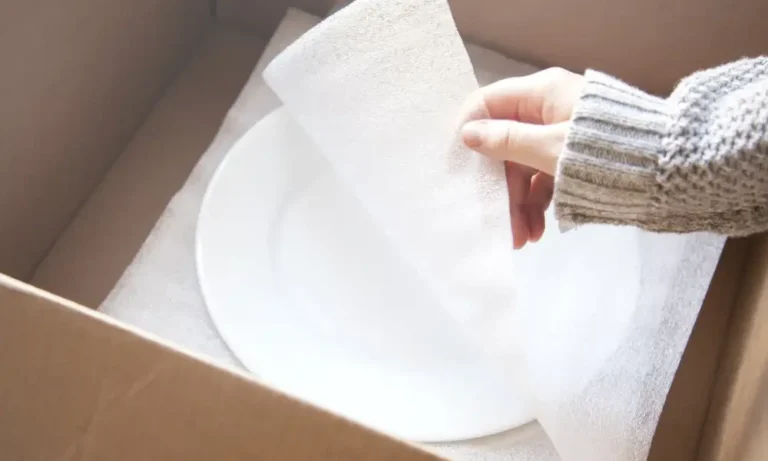
A sturdy, well-cushioned box is the real foundation of packing plates for moving safely. If the bottom’s thin or unpadded, it doesn’t matter how carefully you wrap each plate, the impact goes straight through anyway.
Build a Strong, Shock-Absorbing Base
Once the box is assembled, tape the seams with two or three strips for a solid bottom. Layer two to three inches of crumpled paper, bubble wrap, or foam across the base, and push padding into the corners so there’s no empty space left for things to shift. This is really where a lot of protection comes from, cushioning the vibration at the source instead of just hoping the wrapping holds up on impact.
Check for Stability Before Packing
Set the assembled box on the floor and press down gently with your palm. If it feels thin or unstable, add more filler before moving forward. A solid base means you can pack with confidence instead of worrying the whole stack will shift under its own weight.
Wrapping Plates Properly Before Placing Them in Boxes
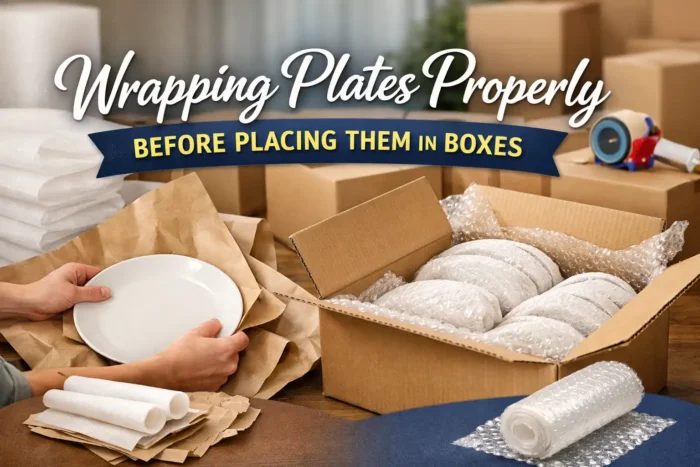
Don’t rush this part. Proper wrapping is what actually keeps plates from touching, rubbing, and chipping against each other in transit.
Wrap Each Plate Individually for Maximum Safety
Lay a sheet of packing paper flat, center a plate on it, and fold the sides up until it’s fully covered. Tape it if needed to hold the wrap in place. Do this one plate at a time so nothing ends up touching bare against another plate.
Once everything’s wrapped:
- Stack three to four wrapped plates together
- Wrap the whole bundle again in paper or bubble wrap
- Tape the outside loosely, just enough to hold the bundle together
Flip the bundle upside down before placing it in the box. Plate centers are weaker than the rims, so putting the sturdier edge in a load-bearing position protects the whole stack better.
Why This Wrapping Technique Works
A lot of people search for how to pack plates for moving without cracking their whole set, and this individual-wrap method is really the answer. It covers every surface of each plate and protects against scratches, chips, and pressure cracks, whether you’re dealing with ceramic, porcelain, glass, or stoneware.
Read More: How to Pack Kitchen for Moving?
Placing Plates Into the Box the Right Way
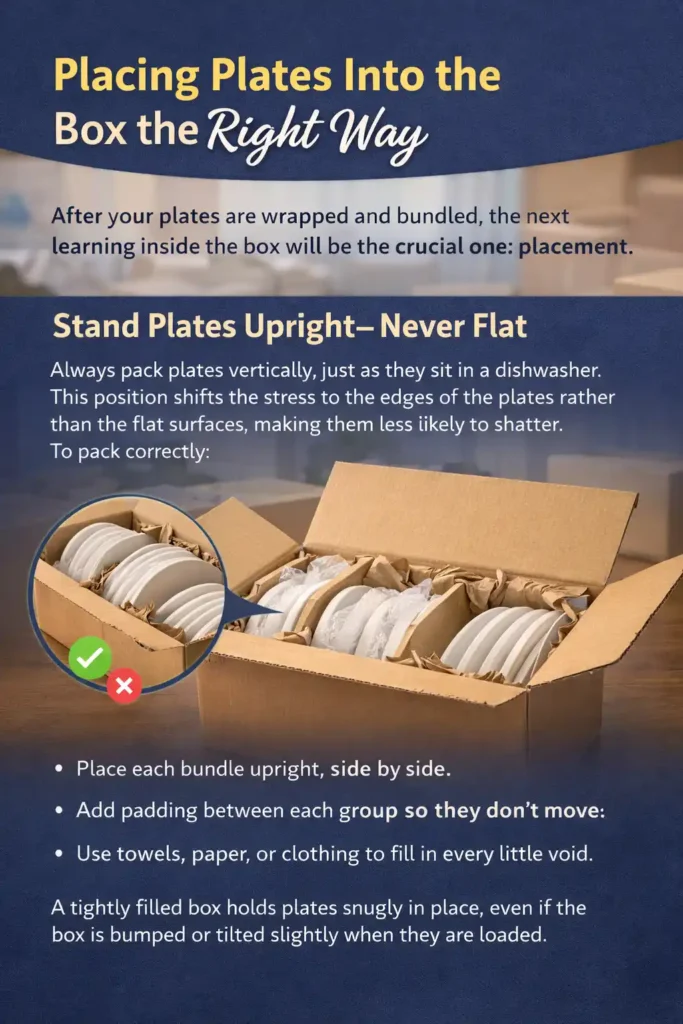
Once everything’s wrapped and bundled, placement inside the box matters just as much as the wrapping itself.
Stand Plates Upright, Never Flat
Pack plates vertically, the same way they’d sit in a dishwasher rack. This shifts pressure to the edges instead of the flat surface, which makes them far less likely to crack.
- Place each bundle upright, side by side
- Add padding between bundles so nothing can shift
- Fill any remaining gaps with towels, paper, or soft clothing
A box packed snugly this way holds plates in place even if it gets bumped or tilted during loading.
Shake-Test the Box Before Closing
Close the box without taping it yet and give it a gentle shake. Anything that moves means it needs more padding. Once nothing shifts, it’s ready to tape shut for good.
Adding Final Padding and Sealing the Box
The top of the box needs the same attention as the bottom. Once plates are standing upright, add another thick layer of crumpled paper or soft towels on top. This keeps everything from shifting upward if the box ends up stacked under something heavier later.
Tape the box securely and reinforce the seams. Even a well-built box benefits from a couple extra strips of tape for the trip.

Labeling and Handling Instructions
Clear labeling changes how a box gets handled. Once it’s sealed, write on every side:
- Fragile – Plates
- This Side Up
Bold, dark lettering makes the warning visible no matter which side is facing out, and it helps movers know not to stack anything heavy on top.
Read More: How Best To Pack Bulky Kitchen Appliances?
Special Considerations for Storage Units and Containers
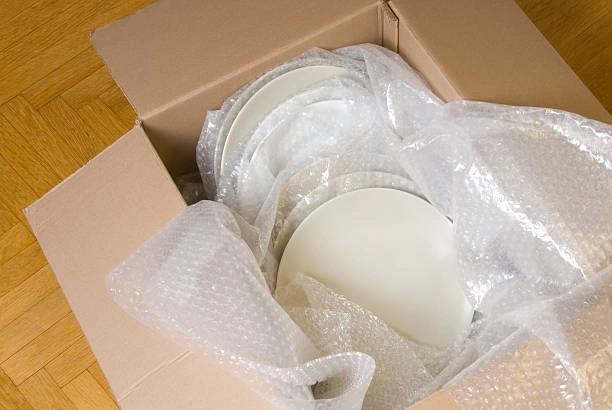
Using a storage unit or shipping container for your move calls for a little extra caution. Keep plate boxes toward the center of the container, away from the walls where shifting tends to happen most, and always place heavier items underneath fragile boxes, never on top. Avoid packing anything restricted or liquid-based in the same container, since a leak or shift can turn into a bigger mess than expected.
If all of this sounds like more than your schedule allows, that’s exactly what professional packers are for. Plenty of homeowners lean on experienced crews for the fragile stuff, especially during larger or more rushed moves.
When Professional Packing Services Are Worth It
A few situations where bringing in help genuinely makes sense:
- Large households with extensive dishware collections
- Vintage or valuable plates that need extra-careful handling
- Tight moving timelines with little room for slow, careful packing
- Anyone who’d rather skip the hands-on process altogether
Professional packers already know the best way to pack plates for moving, which saves time, cuts down on stress, and comes with the right materials and experience to keep your dishware intact from box to unpacking.
Final Thoughts
Studying How To Pack Plates For Moving thoroughly beforehand will help you not only save time on moving day but also save money and avoid stressing out. Using the appropriate materials, some thinking in wrapping, vertical placement, and right labeling makes your plates travel safe whatever the distances. If you want extra peace of mind or personalized assistance, contact us to make your move smoother and safer.
FAQs
Can I use old boxes to pack plates?
Only keep and reuse boxes that are still strong enough to do the job and that have not been weakened by moisture or any other kind of damage. An inferior box or one that is old and worn out will increase the chances of breakage.
Are Foam Sleeves As Protective As Packing Paper For Plates?
Yes, it does, because foam sleeves are very good cushioning and also very easy to use. Many people use foam sleeves and packing paper together.
Does paper do as good a job as bubble wrap in protecting plates?
While bubble wrap has better shock-absorbing properties, packing paper covers more surface. Together, they work great too .
Weight of a platebox?
Keep plate boxes under 40 lbs. Heavy boxes are more difficult to get a hold of, and they are more likely to be dropped or otherwise mishandled.
Can I use one box for bowls and plates?
You can, but you need to keep them separated with thick padding, pack the bowls on their sides just like you do with plates, that prevent downward pressure.
Do you double-box fragile or expensive plates?
For really valuable or antique crockery, double-boxing with a small padded box inside a bigger one offers added protection and dampens shock.