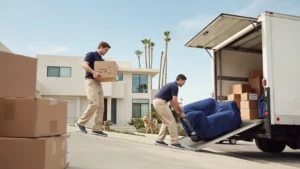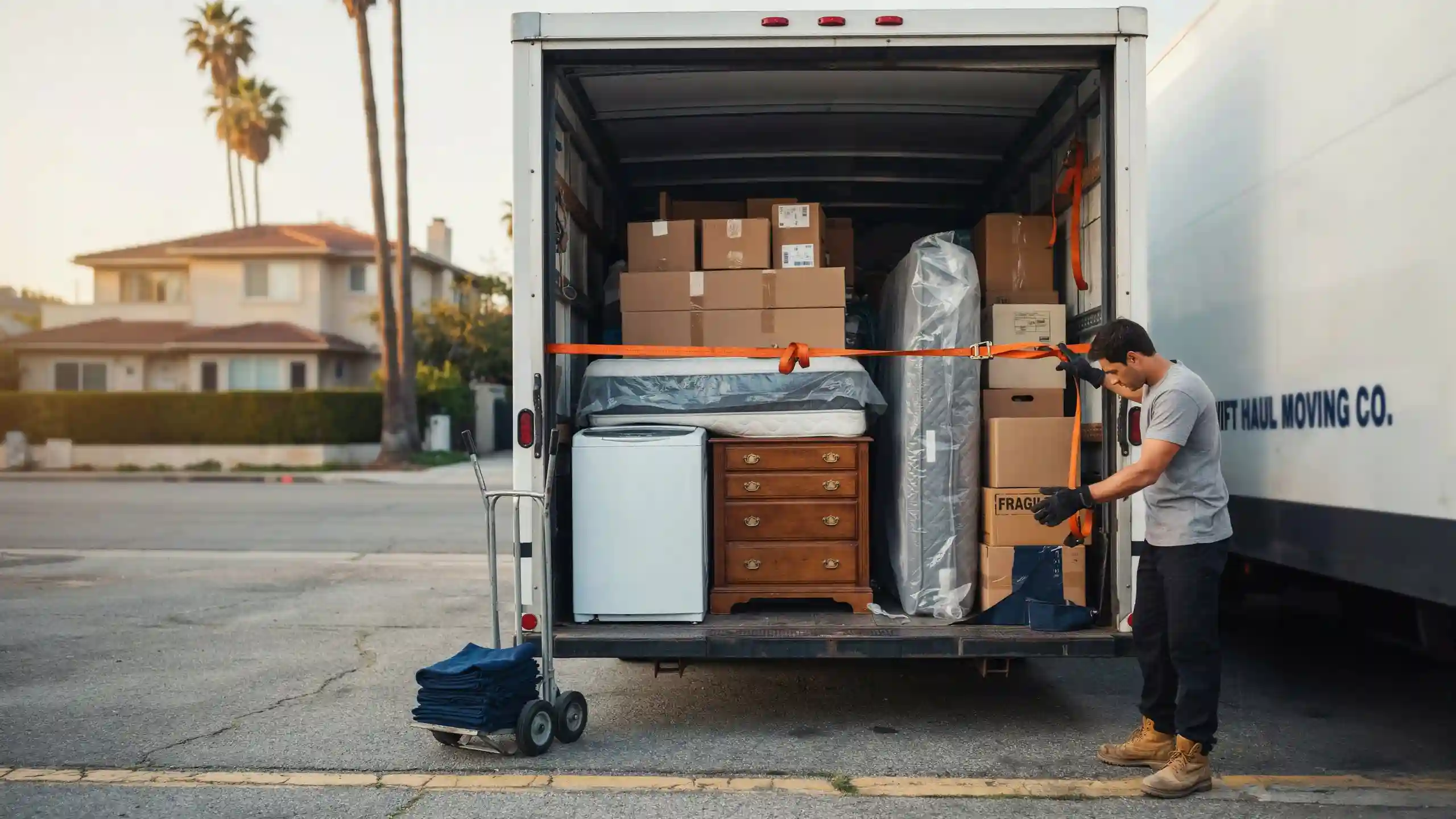
The answer to what to load first in a moving truck is simple. Start with your heaviest items, push them against the front wall, and save light and fragile things for last. Appliances, dressers, and book boxes go in first. Pillows, lamps, and your essentials bag go in last.
A bad load order costs real money. Heavy boxes crush lighter ones, furniture slides on the first hard stop, and you end up unloading half the truck to reach one dresser. Most damage we see comes from order, not bad luck.
The Short Answer: Your Loading Order at a Glance
Here is what order to load a moving truck in, from first to last:
- Heavy base: washer, dryer, fridge, tool chests, solid wood dressers, and boxes of books.
- Mid-weight furniture: sofas, tables, bed frames, and mattresses along the side walls.
- Boxes in tiers: heavy boxes at the bottom, medium boxes above, soft items in the gaps.
- Light and fragile items: lamps, mirrors, TVs, and boxes marked fragile.
- Essentials: the bag with chargers, toiletries, tools, and bedding goes in last, right by the door.
Why Heavy Items Go First (The Physics, Simply Explained)
A heavy load sitting low is hard to tip. Put your heaviest pieces on the floor and the whole truck stays steadier. Put them up high or at the back, and every turn feels loose.
Weight near the cab matters too. The front axle and the cab carry that load best. Items by the door can make the rear swing on bumps and hard braking.
Moving truck weight distribution also works side to side. Picture a washer and dryer, about 250 pounds together, on the left wall. Now picture only pillows and bags on the right. The truck will lean on every curve. Split the heavy items. Put the washer on one side and the dresser or fridge on the other, so the two sides weigh about the same.
This is also where most people get where to put heavy items in a moving truck wrong. The answer is low, forward, and spread across both sides.
Before You Touch a Single Box: Prep That Saves an Hour
Good prep makes loading faster. Spend 30 minutes here and you will save an hour later.
Stage items near the door in four groups: heavy, mid-weight, boxes, and last-in items. Then you load in one smooth pass. You never stop to hunt for the next piece.
Take furniture apart when you can. Remove bed rails, table legs, and shelf pegs. Put the screws and bolts in a small bag. Tape that bag to the piece it belongs to. Don’t toss it in a random box. We have watched people lose an hour looking for one bolt.
Get your gear ready before the truck arrives:
- A hand truck or dolly
- Moving blankets (furniture pads)
- Ratchet straps or rope
- Stretch wrap for drawers and cushions
- Gloves and a box cutter
- Tape and a marker
A Zone-by-Zone Map of the Truck
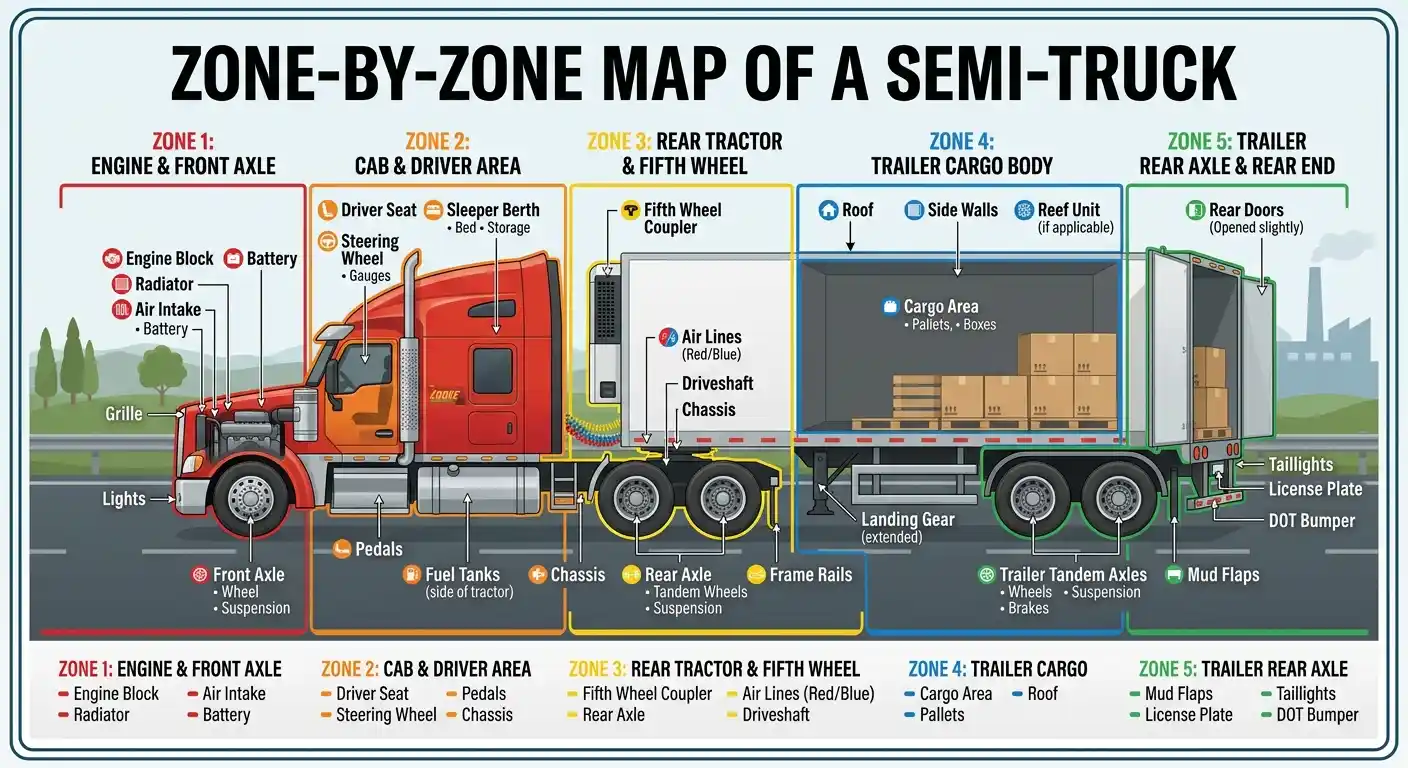
Think of the truck as three zones plus one bonus spot.
The front wall, called the bulkhead, is for your heaviest pieces. This is the base of the whole load.
The middle holds mid-weight furniture and your main box tiers. Most of your stuff lives here.
The back, near the door, holds light boxes, fragile items, and your essentials. It is the last part you load and the first part you unload.
Mom’s Attic: What Actually Belongs There
Mom’s Attic is the space above the cab. You will hear two opinions about it. Some say it is perfect for fragile items. Others say never use it. Both are half right.
Light, soft things belong there. Think pillows, bedding, folded blankets, and lampshades. Keep heavy items out, because they can shift and fall forward. Also keep out anything that hates heat, like candles, vinyl records, or electronics. That spot can get warm in summer.
Furniture or Boxes First? What Pro Movers Actually Do
Furniture forms the base. But we don’t finish all the furniture and then start boxes. We build both up together, tier by tier.
That means a dresser goes in, and sturdy boxes go on top of it and next to it. Then the next piece goes in. This is how to pack a moving truck efficiently. No dead air, and no gaps for things to slide into.
A few pro rules for big pieces:
- Mattresses stand on their sides against the walls, in bags if possible.
- Sofas go on end, up against the wall, and get strapped.
- Dresser drawers face the wall so they can’t slide open.
- Tables go in upside down, or on their sides, with legs padded.
How to Build a Tier That Won’t Shift
A tier is one floor-to-ceiling row across the truck. You finish it, strap it, then start the next. The steps for each tier are:
Put heavy boxes at the bottom. Add medium boxes above them. Fill the gaps with soft things like couch cushions, bagged linens, and towels. Keep the top of each tier flat and tight.
Here is a simple rule. If a box needs two people to carry it, it stays on the floor. A box that heavy on top of a stack is a crushed box waiting to happen.
Use real moving boxes when you can. Laundry baskets and trash cans don’t stack well. They collapse or tip.
How to Secure Items in a Moving Truck
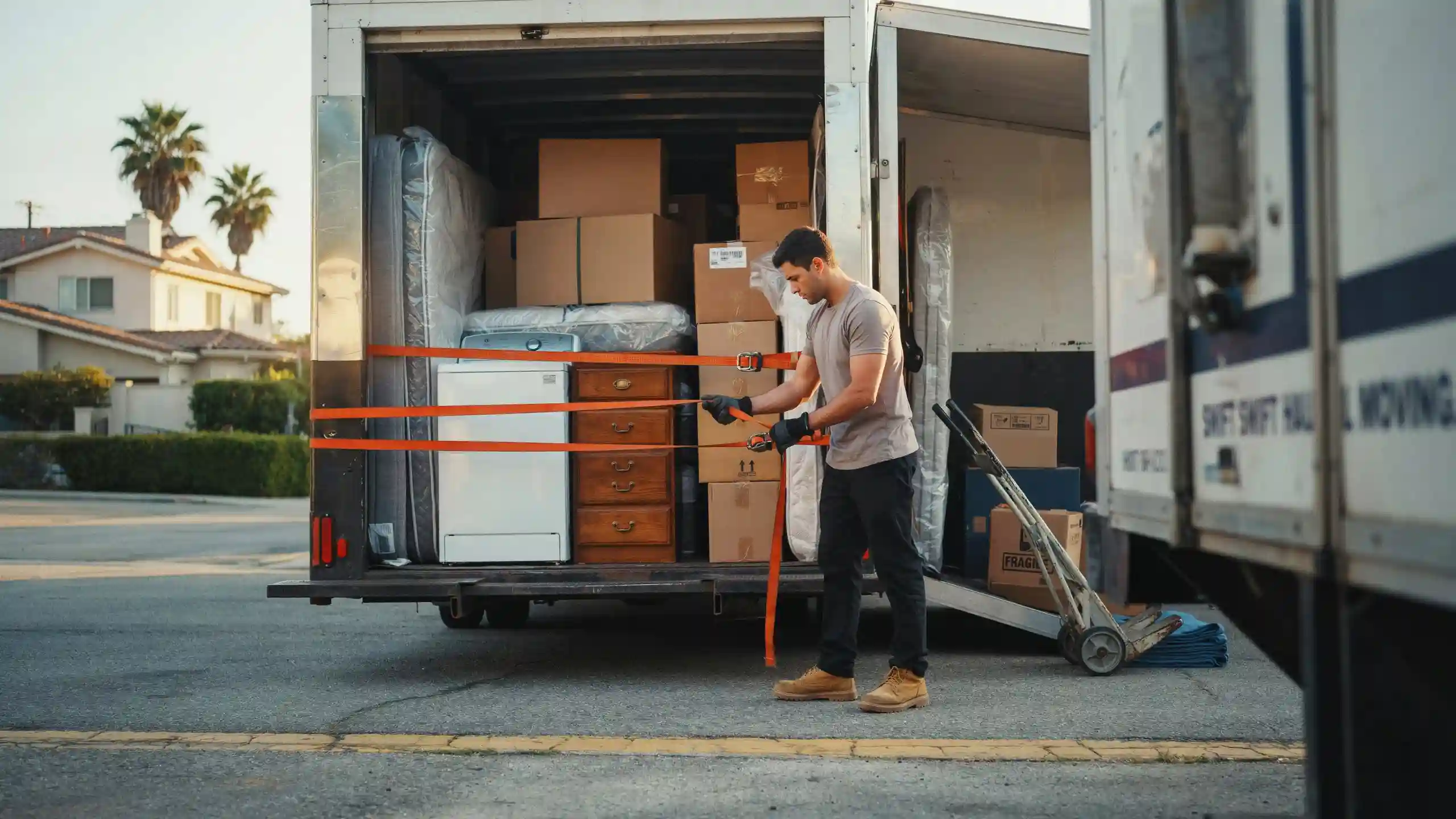
Strap each tier as you go. Don’t wait until the truck is full. By then, you can’t reach the lower rows.
Run straps through the wall rails or tie-down slots, pull them snug, and check that they hold. Then move on to the next tier.
For gaps, use soft items. Pillows, blankets, towels, and cushions all work well. Don’t use fragile boxes, plants, or anything with liquid as filler. They get crushed or spill.
Here is a tip many guides skip. Re-check your straps at your first stop, then every 100 miles or so on a long drive. Loads settle in the first few miles. Straps that were tight at the curb are often loose after one hour on the freeway.
Loading a 26-Foot Truck vs a 10-Foot Truck
The order stays the same. Only the number of tiers changes. Our moving truck sizes guide covers which size fits your home, so we will focus on loading here.
| Truck size | Cargo space | Rough tier count | Best for |
| 10-foot | About 400 cubic feet | 3 to 4 tiers | Studio or small 1-bedroom |
| 15-foot | About 764 cubic feet | 5 to 6 tiers | 1 to 2 bedrooms |
| 26-foot | About 1,680 cubic feet | 8 to 10 tiers | 3 to 4 bedrooms |
Bigger trucks need tighter gap-filling. A 26-foot box has more empty air, so there is more room for things to slide. Fill every hole you see before you strap.
Here is a real scenario. Say you are moving a 3-bedroom home into a 26-foot truck. Tiers one and two hold the fridge, washer, dryer, and dressers. Tiers three to five hold the sofa, mattresses, and heavy box stacks. Tiers six to eight hold the lighter boxes and chairs. The last tiers hold lamps, TV, mirrors, and the essentials bag.
Special Items That Need Their Own Plan
Some things don’t follow the normal flow.
TVs, mirrors, and glass go upright. Slide them between mattresses on the side wall so nothing can lean on them. Wrap each in a blanket first.
Appliances stand upright too. Secure the washer drum with its transit bolts or foam pads so it can’t swing. Tape cords to the back. Empty and dry the fridge a day ahead.
Some items ride in the cab with you. Keep documents, meds, keys, jewelry, and laptops in the front seat.
Some items should not go in the truck at all:
- Liquids and cleaning supplies
- Propane tanks, gas cans, and paint
- Aerosols and anything that can catch fire
- Frozen and fresh food
Loading a Moving Truck by Yourself: Is It Realistic?
You can do some of it alone. Boxes, small furniture, and lamps are fine. Take your time and use a dolly for anything heavy-looking.
It gets risky with stairs, ramps, and anything over 100 pounds. A dresser or fridge on a ramp can slide fast. That is how backs and ankles get hurt.
If you use a ramp, set it at a gentle slope. Make sure it is locked in place. Push the dolly up, don’t pull it. Take one item per trip and keep the path clear.
If you must go solo, do the heavy base with a helper and the rest on your own. Even one extra person makes the biggest pieces safe.
8 Mistakes That Cause Most Moving Truck Damage
- Loading light items first. They get buried and crushed when heavy pieces come in.
- Putting all heavy furniture on one side. The truck leans and handles badly.
- Skipping straps until the end.
- Blocking the door with items you need at arrival.
- Loading fragile boxes mid-truck, where pressure builds as the truck flexes and settles.
- Stacking boxes taller than the tier beside them, so the stack leans.
- Leaving gaps that let items slide.
- Rushing the last hour. Most dropped items happen when people hurry.
Unloading Is the Mirror Image: Load With Arrival in Mind
Last in, first out. What you load last is what you unload first, so plan for it.
Put your essentials bag by the door. Tuck the dolly and a small toolkit there too. You will need them the moment the door opens. You will want your bed sheets, chargers, and a box cutter before you want your sofa.
Most guides skip this part. It saves a lot of time on the other end.
When It’s Smarter to Hire Loading Help
Hiring help is the smart move in a few clear cases. You have heavy pieces like a piano, safe, or big fridge. You have stairs or a long carry. Your time is tight. Or you have a bad back or an old injury.
Labor-only loading is the middle option. You rent the truck. The crew loads and unloads it. Most small local loads end up in the low hundreds. That is far less than full service, and it can protect your back and your furniture.
Our Loading and Unloading Movers in Sherman Oaks crew loads your truck the right way, from heavy base to last box. Chamomile Go has done this for more than 16 years. Need help for your truck day? Contact us today for a fast quote. We can also handle packing before the truck arrives.
FAQs
What do you load first in a moving truck?
Load heavy furniture, appliances, and sturdy boxes first. Place them against the front wall, low to the floor.
Do movers load boxes or furniture first?
Furniture first, as the base. Then boxes and furniture build up together in tiers.
How do you load a 26-foot truck?
Use the same order as a small truck, but plan for 8 to 10 tiers. Strap each tier and fill every gap.
Can I load a moving truck alone?
Yes, for light items. Get help for stairs, ramps, and anything over 100 pounds.
How do I stop items from shifting?
Strap each tier as you go, fill gaps with soft items, and re-check straps at your first stop.
Does the loading order change for long-distance moves?
No, the order stays the same. Just add extra strap checks, about every 100 miles.