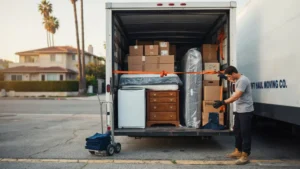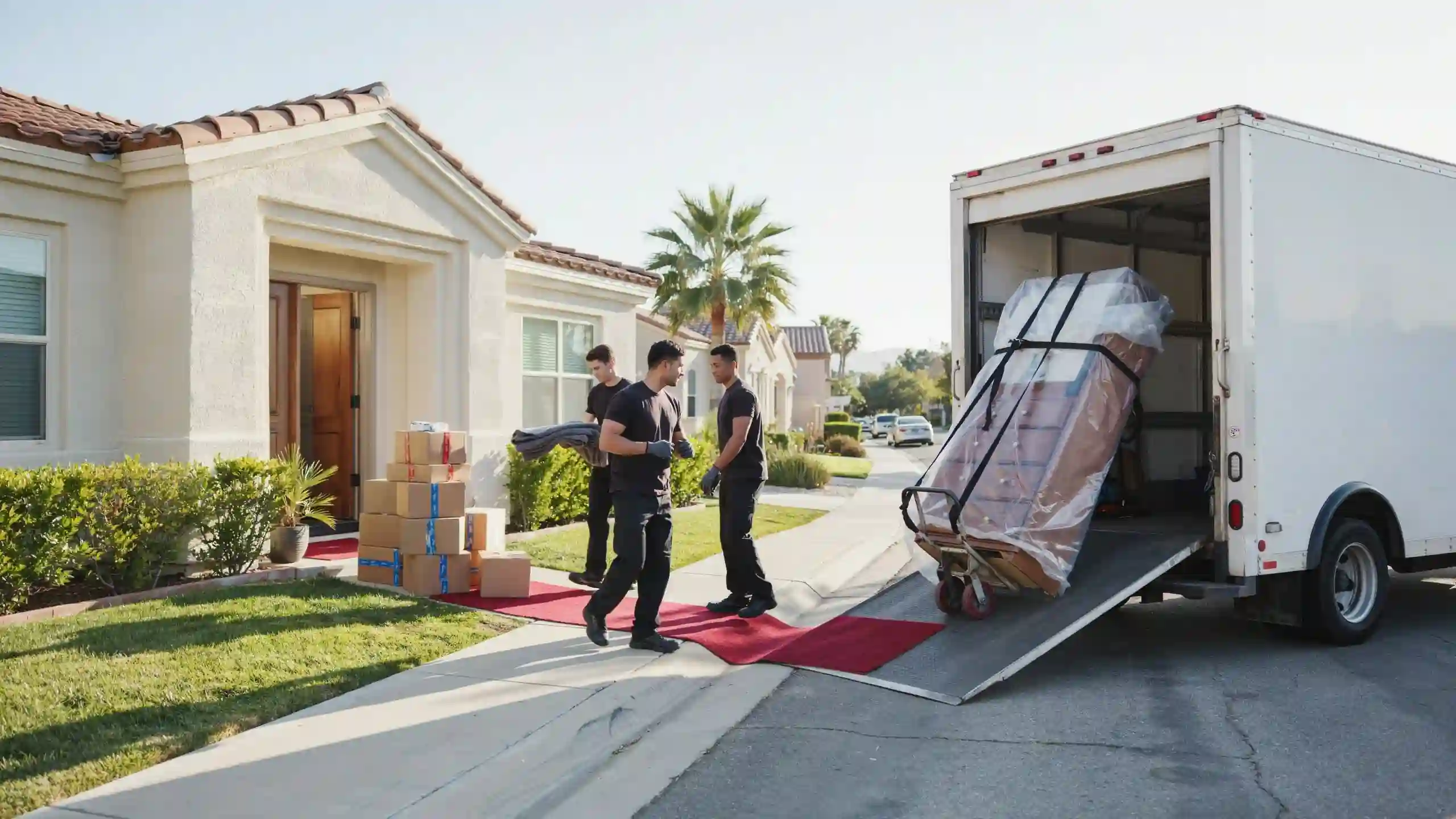
Knowing how to unload a moving truck efficiently comes down to a plan and an order. Walk your new home first and give every room a job. Then take items off in a set sequence: the essentials box, heavy furniture, heavy boxes, and last the light stuff. Most unloads run slow because people grab whatever sits closest to the door.
This guide gives you the exact order, a crew size and time table, and real labor costs. You will also learn to carry heavy pieces without hurting your back or your floors.
The Quick Answer: Unloading Order at a Glance
If you only want the short version of how to unload a moving truck, use this order. It keeps you from moving anything twice.
- Walk the home, mark each room, and clear a path from the truck to the door.
- Carry in the essentials box and any food that needs a fridge.
- Unload heavy furniture next, starting with the rooms farthest from the front door.
- Bring in wardrobe boxes and heavy boxes, placing boxes by room.
- Finish with lighter boxes, fragile boxes, and soft items like pillows and bags.
- Do a final walk-through of the truck and the house before anyone leaves.
Before the Truck Door Opens: The 10-Minute Setup
Spend ten minutes inside before you touch the truck. Walk each room with your floor plan in hand. Tape a sign on every door with the room name. Helpers should never have to ask where something goes.
Next, protect the path. Door jamb protectors save paint in tight doorways. Floor runners keep dirt off and stop slips. Tape the edges down so a loaded dolly cannot push them out of place.
- Pick a staging area, like the garage or a spare room, for boxes that need to wait.
- Mark one drop zone along a wall in each room.
- Park on flat ground close to the door. Some cities require a parking permit, and fees can run roughly $10 to $80.
- In an apartment or condo, ask about HOA rules, quiet hours, and the loading zone.
- Book your elevator reservation early. Many buildings also ask for a certificate of insurance from outside helpers.
- Prop only one door, and keep someone near it for kids and pets.
A bigger truck means a longer carry and more to sort, so it helps to know what your moving truck size can actually hold.
Read the Truck First: What Your Load Tells You
Stand to the side and lift the rolling door slowly. Cargo shifts on the road, and a leaning dresser can fall out. Check for shifted cargo before you reach in.
Take damage photos before you move anything. Shoot one wide photo, then close-ups of any scratches already there. Timestamps help if you ever need to file a claim.
Now read the load. A good load puts heavy items low and near the cab. That keeps the center of gravity steady on the road. So the first things at the door are often lighter, and the heavy pieces sit deeper.
Load order decides unload order. You cannot change that without wasting time. If boxes block the furniture you need, carry those boxes to the staging area, not into their final rooms. Release each ratchet strap slowly, one at a time, with a hand on the load.
The Best Order to Unload a Moving Truck
Some guides say heavy items first. Others say light boxes first. Both are right only some of the time. Here is our rule, and it is the biggest part of how to unload a moving truck efficiently. Only the essentials box and fridge items jump the line. Everything else follows one idea: furniture goes in before boxes fill the rooms.
| Order | What comes off | Why |
| First | Essentials box, food for the fridge | You need them tonight, and food should not sit in the heat |
| Second | Appliances, sofa, bed frames, dressers | Rooms are empty, so heavy furniture has room to turn |
| Third | Mattresses, once frames are in place | They go on frames, not floors |
| Fourth | Wardrobe boxes and heavy boxes | Tall boxes go straight to bedrooms, heavy boxes line the walls |
| Fifth | Lighter and fragile boxes | Less strain, and less to break while you are tired |
| Last | Soft goods, bags, pads, tools | Fills gaps and clears the truck |
Go to the farthest rooms first. That keeps the front hallway open for the next trip.
Set Up an Unloading Relay (and How Many People You Need)
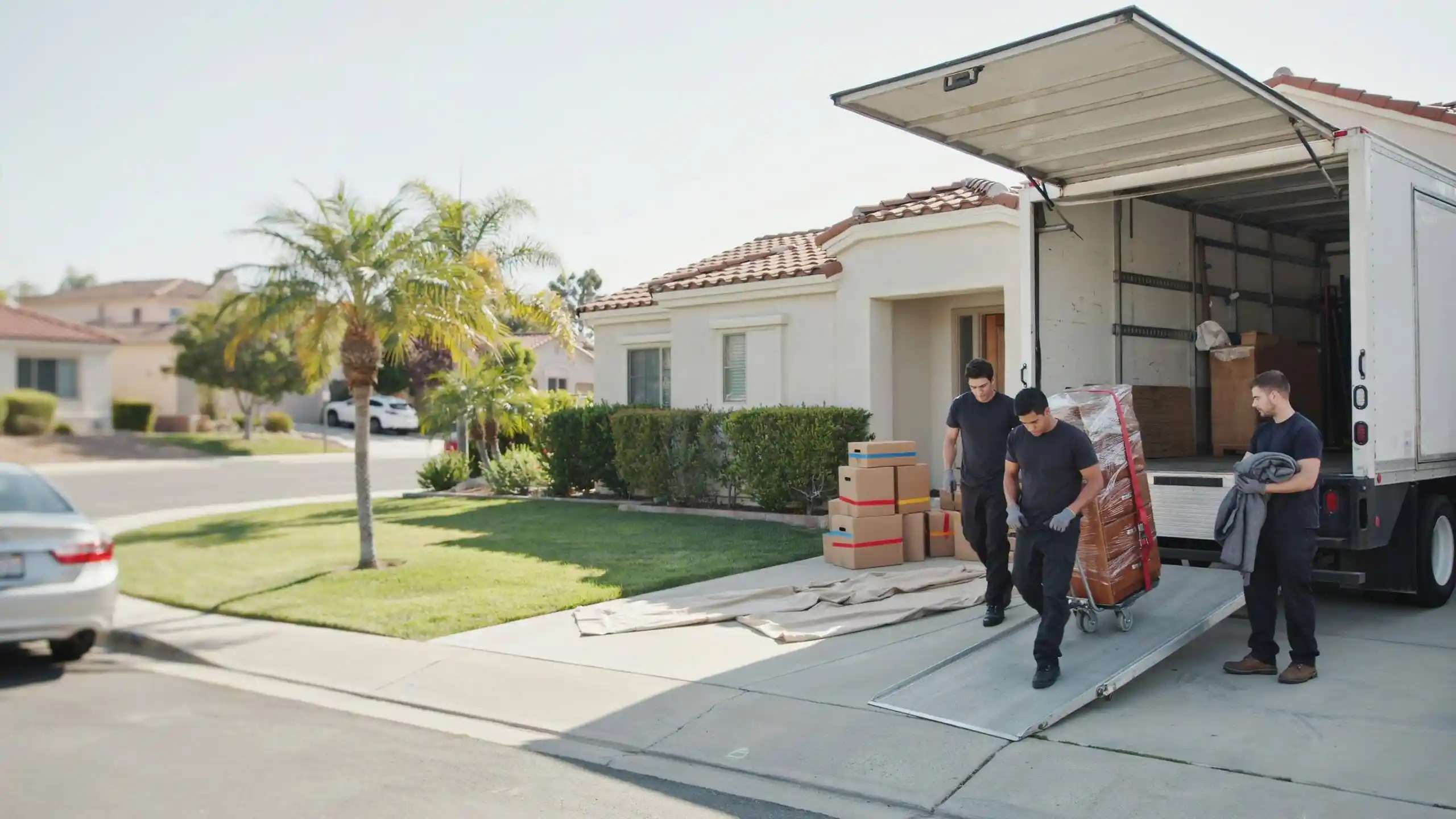
A relay beats everyone walking back and forth. That is how to unload a moving truck efficiently with a small crew. Give each person one of these team roles:
- One person stays on the truck, breaks down the load, and hands items out.
- One person works the ramp and moves things to the door.
- One person stands at the doorway, directs traffic, and watches the entry.
- One or two people place items in the rooms.
With only two helpers, combine the ramp and doorway jobs. Alone, use a dolly and stage items near the door.
Here is a realistic guide by home size. The cost column shows what hiring labor-only movers might run, using $40 to $80 per mover per hour.
| Home size | Crew | Typical time | Hired labor estimate |
| Studio or 1 bedroom | 2 | 1 to 2 hours | $160 to $320 (2-hour minimum) |
| 2 bedrooms | 2 to 3 | 2 to 3 hours | $240 to $480 |
| 3 bedrooms | 3 | 3 to 5 hours | $480 to $960 |
| 4 bedrooms or more | 4 | 4 to 6 hours | $800 to $1,600 |
Stairs, long carries, and a crowded truck add time. Prices change by city and company.
Labor-only movers unload a truck you rent. Professional movers also bring the truck and drive it. Pick based on how much of the job you want to do yourself.
A few moving truck unloading tips apply to any crew. Wear closed shoes and gloves. Drink water every hour. Rest before you feel tired, because tired people drop things.
How to Unload Moving Boxes Quickly
Speed with boxes comes from labels and one simple habit. Never open a box until the truck is empty.
- Keep heavy boxes under about 50 pounds. Books belong in small boxes.
- Use color-coded labels, one color per room, on the top and two sides.
- Add room labels in words, too, so helpers who skip the color chart still get it right.
- Use a hand truck for stacks of three or four, and strap them if the path has a bump.
- Carry fragile boxes by hand, one per trip, and set them in the drop zone along the wall.
- Place heavy boxes at the bottom of each drop zone and light ones on top.
Fragile boxes are easier when they were packed well, like when you learn how to pack plates so they survive the move. Unlabeled boxes cost the most time. Every one needs a question and a pause.
How to Unload Heavy Furniture Safely
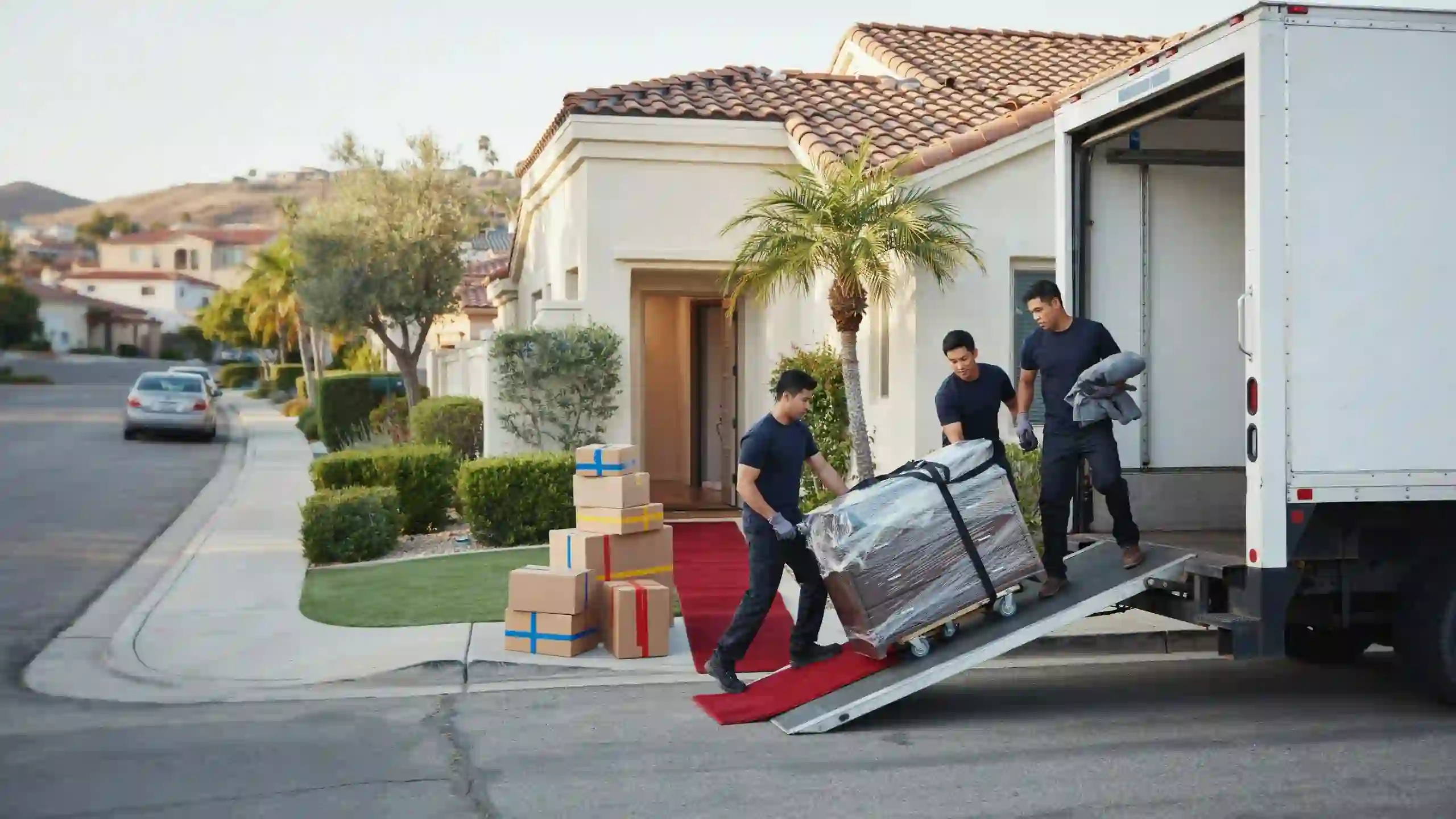
Lift with your legs, keep the load close to your belly, and do not twist. NIOSH lifting guidance puts the limit near 51 pounds for one person, and only in ideal conditions. Read the NIOSH lifting equation if you want the details. Real moves are rarely ideal, so use a two-person lift for anything bulky.
On ramps, watch the ramp angle. A steep ramp makes loads run. Going down, stay uphill of the dolly and let it roll slowly. Strap the load first. If the truck has a lift gate, use it for the heaviest items.
For each common piece:
- Couch. Take off the cushions and legs, then carry it on its end through doors.
- Mattress. Keep it in a bag and carry it on its side with a partner.
- Dresser. Pull the drawers and carry them apart. The empty frame is lighter and safer.
- Fridge or washer. Use an appliance dolly with lifting straps. Keep a fridge upright, and check the manual before plugging it in.
Furniture sliders help on hard floors and carpet. Put them under the corners, then push. Remove a door from its hinges if a piece cannot fit. Tape the screws to the door so they do not get lost.
Stairs, Elevators and Tight Spaces
On stairs, the stronger person takes the lower end, going up or down. Move slowly and rest between flights. A stair-climbing dolly helps with heavy boxes and appliances.
Turns need the pivot technique. Keep one end of the piece planted, then swing the other end around like a door on a hinge. Narrow hallways need a measuring tape before you start. Know if the piece fits, and which way to tilt it.
For elevators, use your elevator reservation window. Pad the walls, load smaller stacks, and keep one person inside while another waits upstairs.
When to Stop and Call the Pros
Pause the job if any of these show up:
- A piano or a safe, which is the most common cause of serious injury.
- A large appliance that needs to go down or up a long set of stairs.
- A carry of more than two flights, or a tight turn with a bulky piece.
- A helper who is tired, sore, or has back pain.
- Pieces you cannot lift with a safe two-person grip.
Injury risk matters more than saving a few hundred dollars. A piano moving cost guide can help you compare the price against the risk.
Ask any crew you hire about valuation and insurance. Valuation sets how much a mover pays if something breaks. Coverage differs by company, so get the answer before work starts. The FMCSA moving guide explains your rights.
If you want a careful crew to take on the heavy work, look at our Loading and Unload in Sherman Oaks service. Chamomile Go brings pads, dollies, straps, and trained movers, so you skip the lifting and keep your day. Book early, because weekends fill fast.
Mistakes That Cost You Time (and Sometimes Furniture)
- Blocked hallways slow every trip, because each carry needs a detour.
- Stacking too high feels fast, but tall stacks tip and you have to restack.
- Unlabeled boxes cost a question each, and ten questions add up to a lost half hour.
- Skipped protection saves ten minutes now and leaves scuffs that last for years.
- Opening boxes mid-unload pulls helpers away, and the truck stays full longer.
- No roles means everyone does a little of everything, and nobody does it fast.
- Skipping breaks leads to dropped items and sore backs by the third hour.
After the Last Box: Final Checks
Walk the empty truck, check corners and the ramp, and look under pads. Then do a second walk-through inside the house.
Count your inventory list. Check numbered boxes and furniture against it. Take new damage photos of anything scuffed, and report it the same day. Compare them with your first photos.
Return the truck on time. Fill the tank to match your rental agreement, since fuel charges are high, and sweep it out. Flatten the packing materials and recycle them. Offer clean boxes to neighbors or local groups.
Then set up for night one. Open the essentials box, put the bed back together, and make it before dinner.
Ready to Skip the Heavy Lifting?
Unloading takes the most strength at the end of a long day. Chamomile Go is a family-owned moving and packing company in Sherman Oaks with more than 16 years of experience. Our crews unload rental trucks and containers with pads, dollies, and straps. Contact us today for any moving crew.
FAQs
How long does it take to unload a moving truck?
A studio or 1 bedroom takes one to two hours with two people. A 2 bedroom takes two to three hours. A 3 bedroom takes three to five. A 4 bedroom or larger takes four to six. Stairs and long carries add time.
What should you unload first?
Unload the essentials box and any food that needs a fridge. After that, move large furniture. This clears space so rooms stay open for heavy pieces before boxes arrive.
How many people do you need?
Two is the minimum for most homes. Use three for a 3 bedroom and four for larger homes. Add one person if the home has multiple floors, so someone covers each level.
Should furniture or boxes come off first?
Furniture comes first once you can reach it. If boxes block it, carry them to the staging area. Then place furniture and move the boxes into their rooms.
Can you unload a truck alone?
Yes, for a small move. Use a hand truck, furniture sliders, and a staging area. Get help for sofas, appliances, and mattresses, since one person cannot carry them safely.
Is it worth hiring labor-only help?
It is for homes over one bedroom, homes with stairs, or anyone with a bad back. Expect about $40 to $80 per mover per hour. Two helpers can save hours and reduce injury risk.