What packing materials are best for moving? You need five things for almost every move: sturdy boxes in mixed sizes, packing paper, wide heavy-duty tape, soft padding, and moving blankets for furniture. Everything else is a bonus for specific items like dishes, mirrors or wardrobes.
The mistake isn’t buying too little. It’s buying the wrong thing for the job. Bubble wrap won’t save a box that splits at the bottom.
The Base Kit: Essential Packing Materials for Moving
These are the essential packing materials for moving that nearly every household or small office needs, whether the move is across town or across the state.
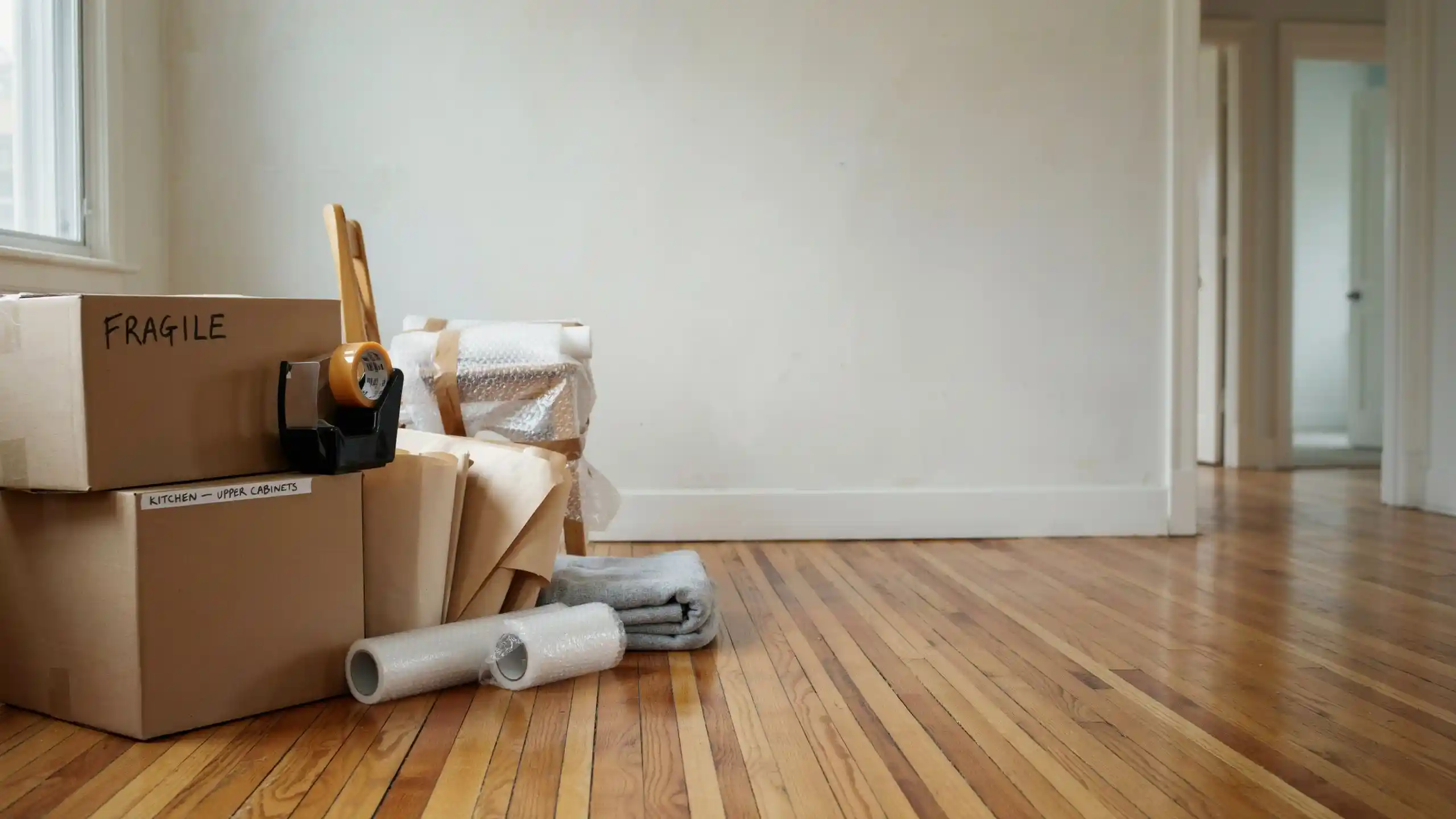
- Corrugated boxes in small, medium and large sizes, plus a few specialty boxes
- Packing paper (plain, unprinted)
- Packing tape, wide and heavy-duty, with a dispenser
- Permanent markers and labels
- Bubble wrap or foam sleeves for the fragile few
- Moving blankets or furniture pads
- Stretch wrap for bundling drawers, doors and loose parts
Box size matters more than people think. Small boxes go to books, tools and canned goods. Large boxes go to pillows, linens and lampshades. A large box full of books becomes something nobody can lift, and it usually fails at the bottom seam.
Tape is where cheap supplies cost you. Thin tape stretches and lets go on the first heavy lift. Seal the bottom with a long strip along the center seam, then run a second strip across each edge. It takes ten extra seconds per box.
Protective Packing Materials for Moving: What Each One Does
There are many types of packing materials for moving, but they fall into three jobs: wrap, fill and brace. Most breakage happens when one of those jobs gets skipped.
Here’s an opinion: packing paper does more work than bubble wrap in most homes. Paper wraps plates, glasses and bowls, and it fills the gaps that let items shift. Bubble wrap is better for odd shapes and glass surfaces, like picture frames, mirrors and glass tabletops.
Some practical pairings:
- Plates go in on their edge, each wrapped in paper, with crumpled paper top and bottom
- Glasses and stemware get a paper wrap, then a second wrap around the stem, and go in the upper layers of the box
- Frames and mirrors take a layer of paper, then bubble wrap, then a snug box built for their size
- Small electronics fit best in their original boxes if you kept them. If not, use padding on all six sides
- Loose gaps in any box get filled. If you shake the box and hear movement, it isn’t done
Skip newsprint for white or light items. The ink transfers and can be hard to clean off. Use plain packing paper, or clean paper from a supplier.
Packing Materials for Furniture Moving
Furniture is where people under-protect. Boxes get attention, but a scratched dining table or a cracked chair leg costs more than a dozen broken mugs.
Packing materials for furniture moving come down to padding, wrapping and keeping parts together.
Moving blankets go on first, touching the surface. They cushion corners and stop surfaces rubbing against each other in the truck. Stretch wrap goes over the blanket to hold it in place, not directly on the furniture. Plastic wrap can mark some finishes and trap moisture against wood or fabric, especially if the piece sits in storage.
Other pieces that earn their place:
- Corner protectors for tables, headboards and frames
- Mattress bags, which keep dust and dirt off
- Sealed bags taped to the furniture for screws, bolts and small hardware, so they stay with the piece they belong to
- Drawer bundling with stretch wrap, so drawers don’t slide open mid-move. Remove drawers from very heavy dressers if you can
Take photos of how things connect before you take them apart. It’s free, and it saves an hour at the other end.
How to Match the Material to the Item
| Item | Best Choice | Why |
| Books and records | Small, sturdy boxes | Weight stays manageable and the box holds its shape |
| Dishes and glassware | Packing paper, double-wall boxes, fill paper | Edge-packing and a snug fit prevent knocks |
| Mirrors, art, glass tops | Bubble wrap plus a close-fitting box | Cushioning plus rigidity |
| Clothing on hangers | Wardrobe boxes | Keeps clothes off the floor and wrinkle-free |
| Sofas and chairs | Blankets plus a fitted cover | Surface protection against dirt and scuffs |
| Wood tables and dressers | Blankets, corner guards, light stretch wrap over the blanket | Protects finish and corners |
| Lamps and shades | Separate wrap for base and shade | Shades crush easily |
A Quick Scenario
Take a family moving out of a two-bedroom apartment. The kitchen has a dozen plates, glasses and a few bowls, and the living room has a sofa, a coffee table and a glass-top console.
They’d get far more protection from paper, a couple of dish boxes, four or five moving blankets and corner guards than from a pile of bubble wrap. The one place bubble wrap earns its cost is the glass top. This is a hypothetical example, but the logic holds: spend on the thing that fails first.
Mistakes That Cause Damage
- Using oversized boxes for heavy items
- Reusing boxes that are soft, wet or crushed. Reuse is fine, but only with sound boxes
- Leaving gaps inside boxes
- Taping only the top and leaving the bottom seam weak
- Stacking heavy boxes on top of light ones
- Labeling only the lid. Label the side too, because lids are hidden once boxes are stacked
What You Can Skip or Replace
You don’t need to buy everything. Towels, sheets, and soft clothing can pad fragile items and fill gaps, and they’re already packed anyway. Suitcases and sturdy bins work for clothes and shoes.
What’s worth paying for is heavy-duty tape, proper dish boxes if you have a lot of glassware, and moving blankets. If you only have a few furniture pieces, renting blankets or buying a small pack is enough.
If you’re not sure how much to buy, count by room. Quantities vary a lot depending on how much you own and how long you’ve lived somewhere, so any “boxes per bedroom” figure is a rough guess. Pack one room first, then buy the rest based on what it took.
Moving a Business or Home Office
Business moves have different weak points. Computers, monitors and printers want padding and their original boxes where possible. Files go in small, sturdy boxes with clear labels by department or desk. Cables get bagged and labeled with the device they came from. If you handle sensitive electronics, check the manufacturer’s guidance before choosing anti-static materials.
Label boxes by destination (room, desk, floor), not just contents. On the other end, nobody wants to open forty boxes to find the router.
For larger or time-sensitive relocations, coordinating materials, crew and truck timing is easier with a team that handles the whole thing. Chamomile Go’s Sherman Oaks Logistics service covers planning, scheduling and transport together, so supplies arrive when packing starts and not a week later.
Need Help With Supplies and Packing?
If you’d rather not sort this out yourself, Chamomile Go can supply materials, provide packing service for your home or office, and move everything. We’re a family-owned team in Sherman Oaks with 16+ years behind us. Contact us today for a quote.
FAQs
What are the most important packing materials for a move?
Sturdy boxes, packing paper, strong tape, labels, padding and moving blankets. Add specialty boxes for wardrobes, dishes or mirrors if you own those items.
Is bubble wrap or packing paper better?
Paper is better for general wrapping and filling. Bubble wrap is better for glass surfaces, frames and awkward shapes. Most moves use both.
Can I use towels and blankets instead of bubble wrap?
Yes, for many items. They cushion well and cost nothing extra. They take up more space in boxes, though, so they work best for larger or sturdier pieces.
How do I protect wood furniture during a move?
Cover it with a moving blanket, then hold the blanket in place with stretch wrap around the outside. Add corner guards if the piece has sharp or exposed corners.
Should I buy new boxes or use free ones?
Free boxes work if they’re clean, dry and strong. For heavy items, anything you’ll stack, or items going into storage, new boxes are safer.