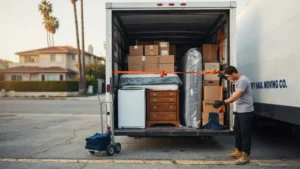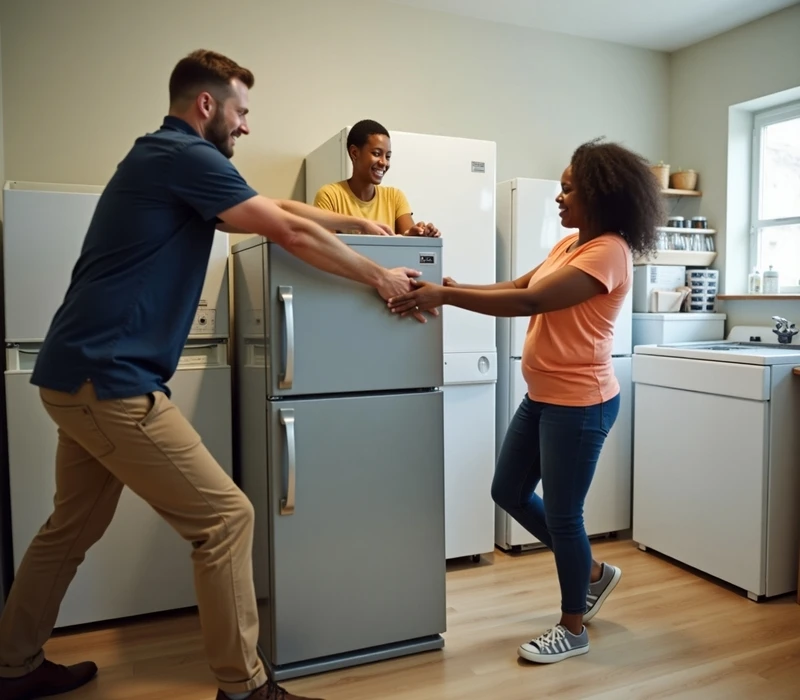
Heavy kitchen items often cause trouble during moves. Shifting homes or reorganizing space, care matters when handling big units. Refrigerators, ovens, washers – each demands attention before being shifted. Mishandling leads to harm, broken walls, or expensive fixes later. Preparation, tools, and smart lifting methods make all the difference. Equipment suited for weight helps avoid slips down hallways.
Start smart – pick solid help or stick to clear steps so your kitchen gear shifts without hassle. Moving goes easier when plans are tight and helpers know their way around appliances.
Getting kitchen appliances ready to move
Getting ready comes first when shifting bulky kitchen gear. A solid plan makes the job go smoother. Heavy items need careful handling before they budge an inch. Think through each step well ahead of time. Moving without prep can lead to trouble fast.
Unplug and Disconnect Appliances
Always disconnect appliances before moving them.
Unplug ovens before starting any work near them. Microwaves need power cut too, so remove the connection entirely. Dishwashers? The same rule applies – take them off the grid completely.
A qualified worker should handle turning off any appliance that runs on gas. Safety comes first when dealing with fuel lines and equipment shutdown.
Most folks who shift kitchen gear expect machines unplugged ahead of time.
Clean and Defrost
For refrigerators and freezers:
- Leave it to thaw a full day before using.
- Clean every inside surface thoroughly.
Open gaps between door edges before you relocate – this stops smells building up, also cuts damp risks.
Heavy kitchen appliances need extra care during moves across far places. What happens here makes a big difference later on down the road.
Remove Loose Components
Take out removable parts such as:
- Shelves
- Drawers
- Racks
- Trays
- Hoses
Start by placing each piece apart, then fasten it within the device with wrap or sticky tape. Inside the machine, fix things one at a time – use padding if needed. Tape holds parts still while coverings guard against bumps. Each object gets its own spot, locked down without slack. Wrap first, attach next, make sure nothing shifts during travel.
Check Door and Hallway Sizes
Before learning how to move kitchen appliances, measure:
- Appliance dimensions
- Doorways
- Hallways
- Staircases
- Elevator openings
Nothing sneaks up when paths stay clear. Smooth moves happen because machines fit without trouble.
Label parts take photos
Before disconnecting anything:
- Mark each wire plus hose clearly.
- That way mix-ups stay avoided during reassembly later on.
- Take photos of connections.
- Keep screws and tiny pieces inside marked pouches.
Start here if you want things to go smoother when setting up again.
Tools Needed to Move Heavy Appliances
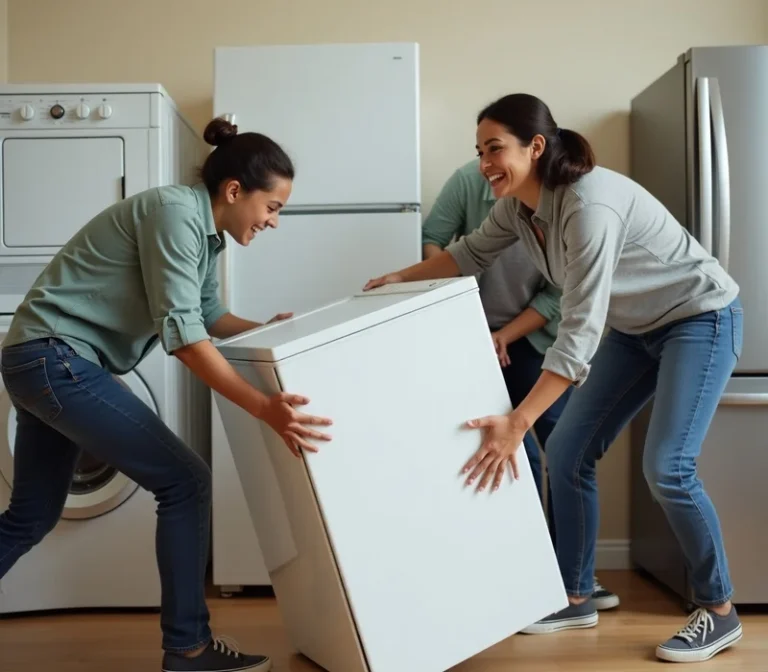
Lifting gear helps when shifting bulky kitchen machines. Equipment built for weight cuts risk during transfers. Proper devices smooth the path across floors. Tools designed well reduce strain on your body. Handling large units becomes less risky with support aids.
Appliance Dolly
Heavy moving jobs often go smoother with a sturdy appliance dolly nearby. Sometimes it’s the only way bulky machines make it through doorways without tipping. Moving refrigerators or washers usually takes more than muscle – this tool helps balance weight safely. Without support from equipment like this, floors can get damaged during transport. The right gear matters when shifting large household items across rooms or into trucks.
Look for:
- Heavy-duty wheels
- Built-in safety straps
- High weight capacity
Heavy-duty rollers help experts shift bulky kitchen gear without strain. Some prefer these tools because they reduce effort during transport. Moving big items becomes easier when wheels take the load. Workers often choose them for safer handling of appliances.
Furniture Sliders
Sliding underneath heavy items, furniture sliders let them glide smoothly over surfaces. These small tools prevent scratches when shifting large objects room to room. Instead of lifting, just push – movement becomes easier on any floor type.
Sliders come in handy when shifting a heavy stove across flooring that dents easily. Try tucking one beneath every leg before inching the unit forward carefully.
Lifting Straps
Weight moves more smoothly through lifting straps, easing pressure off the spine.
Benefits include:
- Better control
- Improved balance
- Fewer chances to get hurt
Moving Blankets and Pads
Start with thick blankets when shielding devices. Then secure everything using strong tape instead of straps. Old sheets work well if you lack padding material. Cardboard helps where corners need extra coverage. Finish each bundle with plastic wrap to keep dust out
- Moving blankets
- Furniture pads
- Protective covers
Packing blankets wrap around machines to block scratches.
Packing Tape and Stretch Wrap
Use tape and stretch wrap to:
- Secure appliance doors
- Bundle cords and hoses
- Keep things steady while moving them
Basic Tool Kit
Store these items close at hand
- Screwdriver
- Adjustable wrench
- Pliers
These come in handy when taking devices apart or putting them back together.
Read More: What To Pack First When Moving?
Understanding How to Move Bulky Kitchen Appliances
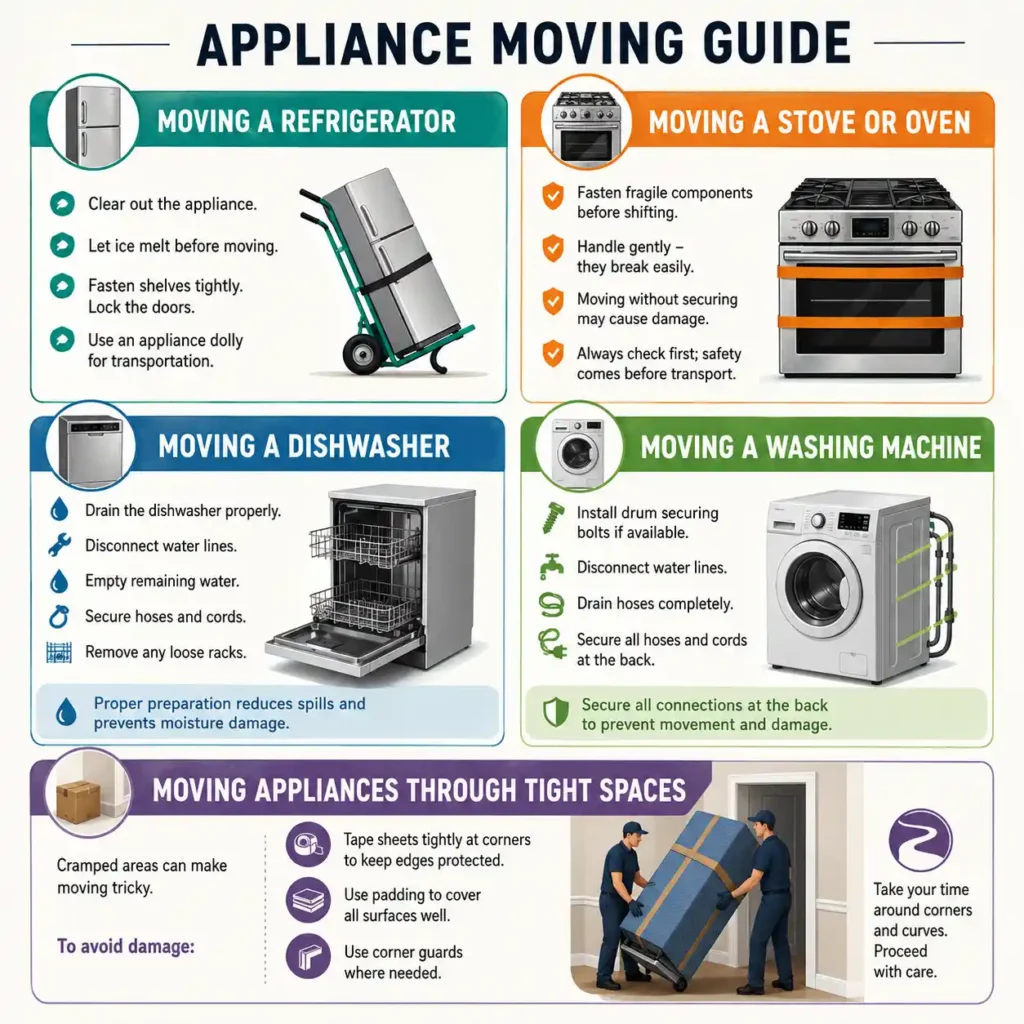
Moving a Refrigerator
Fridges need extra attention – thanks to those busy little motors tucked inside.
- Cooling parts can act up if ignored too long.
- Start by clearing out the appliance.
- Then wait for ice to melt away before moving on.
- Fasten shelves tightly. Doors need locks.
- Use an appliance dolly for transportation.
Moving a Stove or Oven
Before shifting a stove, fasten its fragile components.
- These inner pieces need care during relocation.
- Handle them gently – they break easily.
- Moving without securing might damage what lies within.
- Always check first; safety comes before transport.
Moving a Dishwasher
Dishwashers require proper draining before transport.
- Disconnect water lines.
- Empty out whatever water is left.
- Secure hoses and cords.
- Take out any loose racks when needed.
Getting things ready the right way lowers chances of spills along with harm from moisture.
Moving a Washing Machine
Far inside, parts of washing machines might move when they’re carried from one place to another.
- When present, fit the drum securing bolts.
- Disconnect water lines.
- Drain hoses completely.
Fasten every hose and cord along the rear section. Tether each line behind where it stands. Attach all tubing and wires to the back area. Loop each cord securely at the machine’s rear. Fix every hose and lead in place toward the back. Tie down all connections along the posterior side.
Moving Appliances Through Tight Spaces
Beside shifting bulky kitchen gear, cramped areas tend to complicate things further.
To avoid damage:
- Tape sheets tightly at corners so edges stay put during shifts.
- Bounce stops when padding lines each surface well.
- Use corner guards where needed.
Take your time when going through curves. Around each bend, proceed with care.
Loading Appliances into a Moving Truck
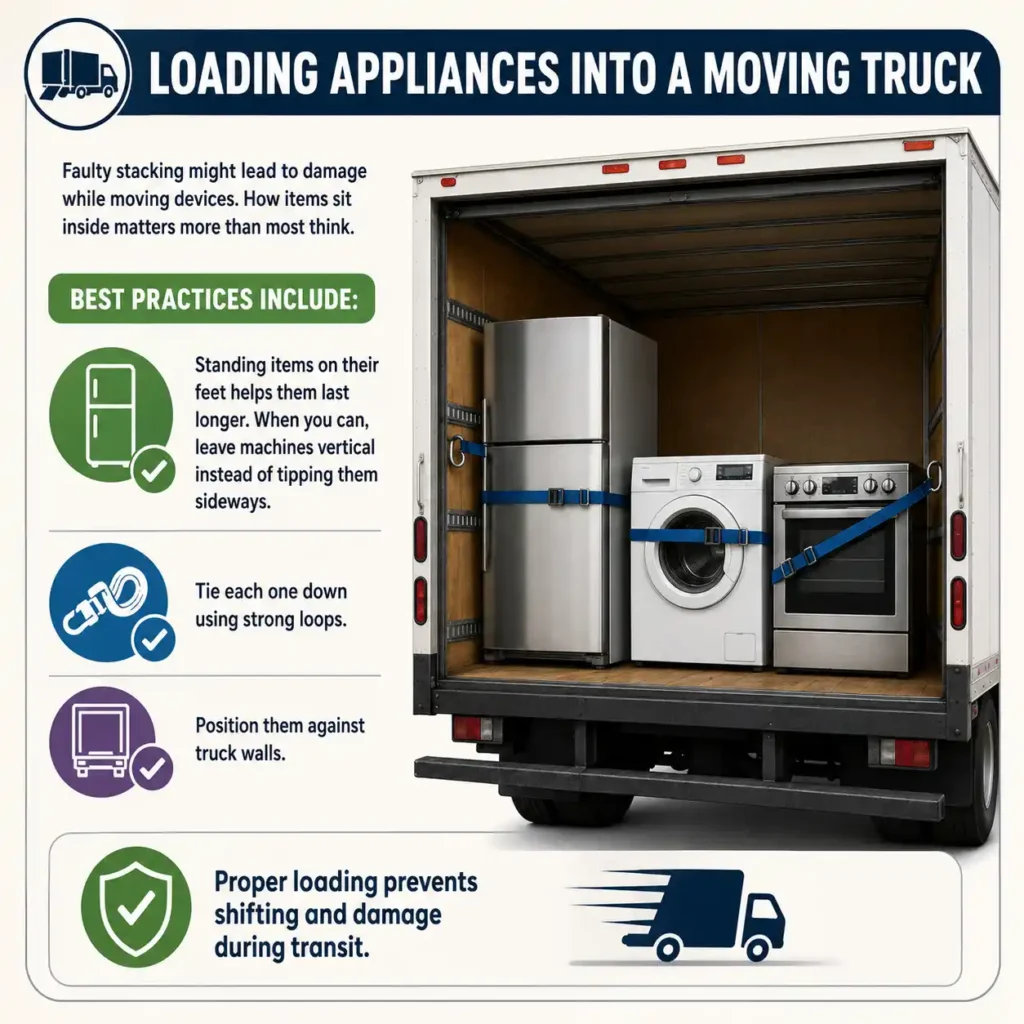
Faulty stacking might lead to damage while moving devices. How items sit inside matters more than most think.
Best practices include:
- Standing items on their feet helps them last longer. When you can, leave machines vertical instead of tipping them sideways.
- Tie each one down using strong loops.
- Position them against truck walls.
Proper loading prevents shifting and damage during transit.
Unloading and Reinstalling Appliances
Sometimes a smooth glide beats heavy carrying every time. Rolling it down keeps hands clear when shifting weight slowly off the edge.
- Position appliances carefully.
- Level each appliance properly.
- Start by linking the hoses back into place. Power sources come next – attach them carefully.
- Once devices have dried completely, that is when you can plug them in. Only after moisture has gone should power be restored. When no dampness remains inside, then it’s safe to connect. After air reaches every part, electricity may return. Not until wetness disappears entirely comes the moment to reconnect.
Once you’ve done each step, your appliances will work just fine where they’re now placed.

Why Hire an Appliance Moving Company?
Moving bulky kitchen appliances can be tricky, risky, and time-consuming. That’s why hiring a professional appliance moving company like Chamomile Go is your best choice especially if you want safety, speed, and peace of mind.
Experience and Expertise
Our team is trained to handle all types of appliances with care:
- We safely disconnect gas lines, water hoses, and electric connections
- We know how to lift and move appliances without causing damage
- We’ve handled thousands of bulky kitchen appliances across Los Angeles, including Sherman Oaks
Safety and Insurance
Avoid injury and protect your home by leaving the heavy lifting to the pros.
- We use safe moving techniques and the right tools
- Your appliances are covered with insurance during the move
- No scratched floors or broken units we treat your home like our own
Time-Saving and Stress-Free
From prep to placement, we do it all.
- No need to find helpers or rent tools
- We manage every part of the process so you don’t have to
- If you’re in Sherman Oaks, our moving services are quick and reliable just a call away
Tools and Equipment Included
You don’t need to buy or rent a thing.
- We bring appliance dollies, lifting straps, sliders, and pads
- All tools are included in our moving and packing services in Sherman Oaks
When Hiring Pros is a Must
Call the experts when:
- You have bulky kitchen appliances that can’t be moved safely alone
- Your space has tight hallways, stairs, or fragile flooring
- You’re dealing with gas appliances
- You simply want the move done right and without stress
Trust Chamomile Go for Moving in Sherman Oaks
At Chamomile Go, we offer full-service solutions for moving and packing in Sherman Oaks and nearby areas. From bulky kitchen appliances to entire home relocations, our experienced team is ready to help you move smarter and safer. Contact Chamomile Go today for expert appliance moving, packing, and full-service relocation in Sherman Oaks!
FAQs
What Is The Safest Way To Move Heavy Kitchen Appliances Like A Refrigerator Or Stove?
The safest way to move heavy kitchen appliances is to unplug and defrost them first, disconnect water or gas lines properly, and use moving straps or a dolly for support. Make sure you clear the path, protect floors with sliders or cardboard, and have an extra pair of hands to guide the process.
Should I Hire Professional Movers For Relocating Large Kitchen Appliances?
Yes, hiring professional movers for bulky kitchen appliances is often the safest and most efficient choice. Movers are trained to handle heavy, delicate items like refrigerators, ovens, and dishwashers, minimizing the risk of damage to your appliance or property.
Do I Need To Prepare My Kitchen Appliances Before Moving Them?
Absolutely, preparation is key. Empty all contents, clean the appliance, unplug it, and if it’s a refrigerator or freezer, defrost it at least 24 hours in advance. Secure loose parts like shelves or trays and wrap the appliance in moving blankets or padding.
How Do I Protect My Floor When Moving A Heavy Kitchen Appliance?
To protect your floors, use furniture sliders, thick cardboard, or plywood sheets. Avoid dragging the appliance directly on tile, wood, or vinyl flooring, as this can scratch or crack the surface.
Can I Move A Dishwasher Without Professional Help?
You can, but caution is required. First, shut off the water and power supply. Disconnect the water line and drain hose carefully. Tilt the dishwasher gently and slide it out. Wrap it securely and avoid laying it flat if it has internal water or detergent.