Kitchen boxes are almost always the heaviest and most annoying ones on moving day, and pots and pans are usually the reason why. Big, heavy, oddly shaped, none of that makes cushioning them easy. Learning how to pack pots and pans for moving properly saves real time, prevents dents and scratches, and takes a lot of the stress out of packing day.
Chamomile Go sees this constantly, cookware that wasn’t packed right ends up scratched, dented, or worse, and it’s almost always avoidable with a bit of extra care upfront.
Why Properly Packing Pots and Pans Matters
Kitchenware isn’t like clothes or decor. Pots, pans, lids, and specialty cookware come in every size, weight, and material imaginable, and all of it scratches, dents, or chips if handled carelessly.
Packing pots and pans the right way does a few things at once. It protects cookware that often costs more to replace than people expect, uses box space efficiently instead of wasting it, makes unpacking faster and more organized, and keeps boxes balanced enough to actually lift safely. A little extra time here pays off later.
What You Need Before You Start Packing
Getting supplies together first makes the whole process go faster and feel less chaotic.
You’ll want medium or large sturdy moving boxes, packing paper or bubble wrap, dish towels or soft cloths, strong packing tape, cardboard dividers for lids, and a permanent marker for labeling. Having everything on hand before you start means less running around mid-pack looking for one more roll of tape.
Read More: How to Pack Kitchen for Moving?
The Best Way To Pack Pots And Pans Safely
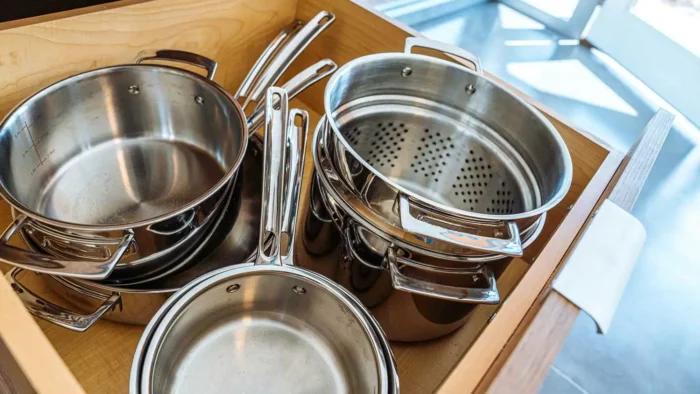
Getting this right really comes down to how you stack and cushion everything. Here’s the process broken into simple steps.
- Clean and dry everything first. Packing wet or dirty cookware invites odors, mildew, or staining during transit.
- Sort by size. Biggest to smallest tells you what can nest together and what needs separate wrapping.
- Wrap each item individually. Cover the inside and outside with packing paper or kitchen towels. Heavier cookware benefits from extra padding to keep metal from touching metal.
- Stack carefully. Nestle smaller pots inside larger ones with a sheet of paper or cloth between them, this saves space and protects non-stick surfaces from scratches.
- Pack lids separately. Lids are fragile and prone to cracking, wrap each one individually and stand them upright in their own box with dividers.
- Load the box properly. Heaviest items go on the bottom, lighter ones on top, and any gaps get filled with towels or crumpled paper so nothing shifts during the drive.
- Seal and label clearly. Tape it securely and mark it “Kitchen – Pots and Pans,” so movers know to handle it with a little extra care.
Extra Tips to Protect Expensive Cookware
High-end or specialty pieces deserve a bit more attention than everyday pots and pans. Line glass lids with two layers of bubble wrap instead of one. Keep cast iron separate from lighter cookware, since the weight difference alone can cause damage. Use smaller boxes for heavier or more valuable pieces rather than cramming everything into one large box. And never let non-stick surfaces rub directly against anything else during transit.
How To Pack Pots And Pans for Long-Distance Moves
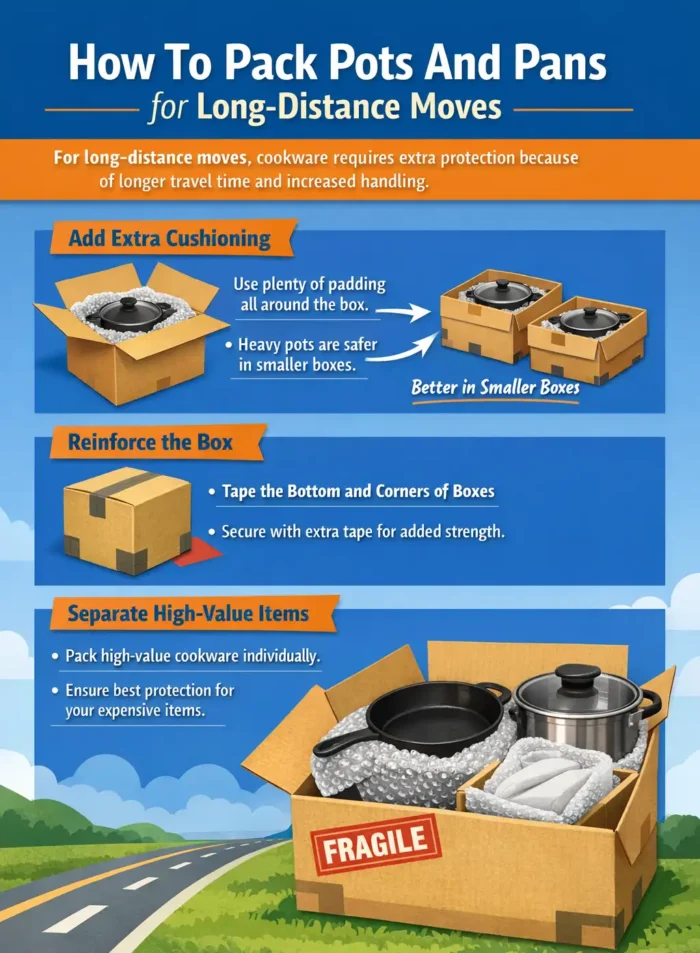
For long-distance moves, cookware requires extra protection because of longer travel time and the increased handling.
Add Extra Cushioning
Extra padding all the way around the box line Avoid putting too much weight in one large box ( heavy pots and pans are v safer in smaller boxes place of one big box)
Reinforce the Box
Tape the Bottom and Corners of Boxes When Moving Add extra tape to the bottom and corners of each box wait to the end to put this heavier duty tape on do not apply it until everything is packed.
Separate High-Value Items
The high-level cookware should be individually packed for best protection.
Packing Pots And Pans in Small Kitchens
Smaller kitchens benefit from a bit more organization upfront. Start by decluttering, moving is a good excuse to donate or recycle cookware that’s just taking up space. Pack by category, frying pans together, stockpots together, baking cookware and cast iron each in their own group, this makes both packing and unpacking noticeably faster. Running low on packing paper? Kitchen towels, oven mitts, and aprons work fine as backup padding.
Common Mistakes to Avoid
A few avoidable mistakes tend to cause the most damage.
- Skipping the wrap on “sturdy-looking” pieces. Even heavy cookware scratches easily against metal, looking tough doesn’t mean it’s protected.
- Overpacking one box with too much weight. This makes it both unsafe to lift and more likely to fail mid-move.
- Forgetting to separate lids from pots. Probably the single most common mistake, lids crack far more easily than people expect once they’re rattling around loose.
Pack Pots And Pans Efficiently Without Stress
Packing doesn’t have to be stressful. After you pack pots and pans more packaging becomes much easier. That consistency, combined with organization and proper padding, will keep your items safe and help you save time on moving.
Top moving companies, including Chamomile Go, note that smart packing helps reduce damages and makes for a more seamless move.

Final Thoughts
Packing kitchen cookware isn’t rocket science. Once you learn How To Pack Pots And Pans For Moving, you can pack everything from delicate lids to hefty cookware with ease. Using the right materials and time-tested packing methods will make your everything from your move safer, easier, and a whole lot less stressful.
For professional advice, or if you simply want someone to do the packing for you, get in touch with us today-we’re here to make your move a little easier.
FAQs
What is the best way to pack pots and pans for moving?
Nest pots by size, place paper or cloth between them, and pack lids separately to prevent scratches.
Do you need to bubble wrap pots and pans when moving?
Bubble wrap is not required, but using paper or towels is enough to protect them during transport.
How to pack dishes for moving without breaking them?
Wrap each dish individually, pack them vertically in a sturdy box, and fill gaps with cushioning.
How soon should I start packing for a move?
Start packing 4–6 weeks before moving, beginning with items you use the least.
How early should I pack my kitchen before moving?
Most people pack their kitchen two to three days before moving day since it’s one of the most used areas in the home.