Moving day is already a lot to handle. But that moment you open a box and find your favorite dish cracked or a family heirloom broken in two — that hits differently. It doesn’t matter if you’re moving a few blocks away or crossing the country, knowing how to pack fragile items for moving is what separates a smooth move from an expensive, heartbreaking one. And honestly, it’s not that complicated once you know what you’re doing. The right materials and a little patience go a long way in keeping your most delicate things safe.
This guide covers what professional movers actually do — the supplies they use, how they wrap different items, and the mistakes they never make twice. By the end, you’ll know exactly what to do and feel a lot more confident heading into moving day.
Essential Packing Materials You’ll Need
Good packing starts before you wrap a single thing. When it comes to packing fragile items for moving, your supplies are everything. Skimping here is one of the most common mistakes people make — and they usually regret it when they’re picking up pieces on the other end.
Boxes — Small to medium boxes work best for anything heavy or breakable. Big boxes get unmanageable fast. Always go for double-walled cardboard and toss anything that looks water damaged, dented, or worn out.
Bubble wrap — Small bubbles for delicate stuff like wine glasses, larger bubbles for things like vases and frames. Two rolls is a good starting point for most homes.
Packing paper — Clean newsprint or kraft paper is ideal. It won’t leave ink marks on your stuff the way old newspaper will. A typical kitchen needs around 25 pounds of it, which sounds like a lot until you’re actually packing.
Packing peanuts — Messy? Yes. Effective? Also yes. They fill gaps and stop things from moving around. Biodegradable versions are easy to find if that matters to you.
Packing tape — At least 2 inches wide, good quality. Budget one roll for every 10 boxes. Brightly colored tape on fragile boxes catches people’s eyes and reminds them to be careful.
Cardboard dividers — These are a game changer for glasses and stemware. Each piece gets its own slot and nothing touches. Buy them or make your own from spare boxes.
You may read How To Pack Tv For Moving Without Box?
10 Essential Packing Tips for Fragile Items for Moving
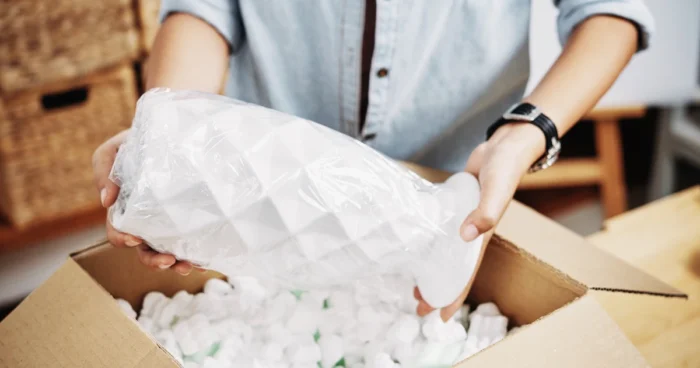
Professional movers follow the same process every time because it works. These tips cover everything you need to know about packing fragile items for moving the right way — no guesswork, no regrets.
1. Build a Strong Base Before Anything Goes In
The bottom of your box takes the most punishment. Seal it with three strips of tape, add a flat piece of cardboard for support, then lay down a two-inch cushion of crumpled paper or bubble wrap. That layer at the bottom is doing more work than you’d think.
2. Wrap Everything on Its Own — No Exceptions
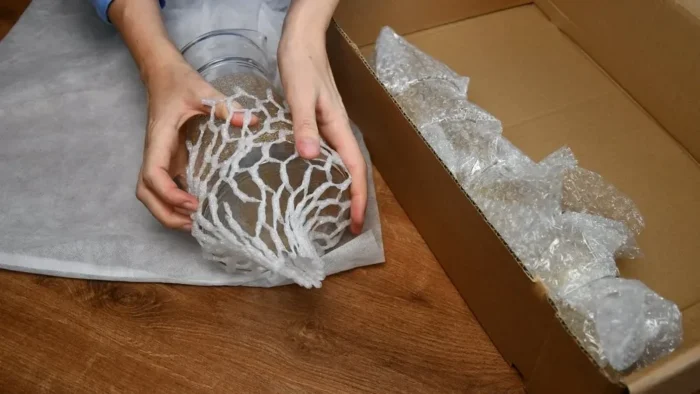
Fragile items touching each other inside a box is how things break. Every single piece needs its own wrap. Use packing paper, add a second layer for anything with handles or unusual shapes, and tape it down so it stays secure throughout the move.
3. Stuff the Inside of Hollow Items
Vases, cups, bowls — anything hollow needs internal support before you wrap the outside. Crumple some packing paper and gently stuff it inside. It keeps the walls from caving in under pressure and makes a real difference on long drives.
4. Stand Plates on Their Edges, Not Flat
Stacking plates flat puts all the weight on the bottom one — and that’s usually the one that cracks. Stand them upright like records in a crate, wrap each one individually, and tuck folded paper between them. It feels counterintuitive but it works every time.
5. Wrap Stemware Starting at the Stem
The stem is the weakest part of any wine glass. Start wrapping there, then stuff the cup, then wrap the whole thing in bubble wrap and tape it closed. Use a box with cell dividers so each glass has its own protected space and never touches another.
6. Pack the Box Until Nothing Can Move
After everything is in, fill the remaining space with crumpled paper until the box is firm. Give it a shake — if anything shifts or rattles, add more. A fully packed box protects itself. A half-empty one is a problem waiting to happen.
7. Heaviest Items Go In First
Always pack from the bottom up — heaviest and most durable pieces first, lightest and most delicate on top. It keeps the box balanced and makes sure nothing fragile ends up crushed under something it was never meant to support.
8. Label Every Side of the Box
Write “FRAGILE” on all four sides and the top. Draw arrows pointing up. It takes under a minute and it actually works — people handle labeled boxes more carefully, whether they admit it or not.
9. Keep the Irreplaceable Stuff With You
Heirlooms, jewelry, meaningful artwork — don’t put these on the truck. Keep them in your own car where you have full control. Some things just aren’t worth the risk, no matter how well you pack them.
10. Find the Right Weight Balance
Too heavy and the box becomes a safety hazard. Too light and things slide around inside. You want the box to feel solid and full, with contents that don’t move, but still manageable enough for one person to carry comfortably.
How to pack fragile items without bubble wrap
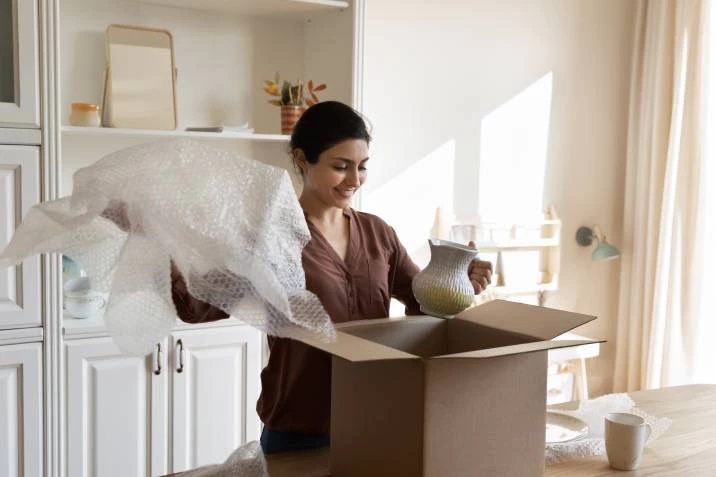
Bubble wrap is really great. You do not actually need bubble wrap to keep your fragile items safe during a move. There are plenty of household items that work just as well as bubble wrap. Sometimes bubble wrap is not even necessary because these household items work even better.
Clothing is your friend when you are trying to keep your fragile items safe. You can wrap your dishes and your glasses in t-shirts or in socks or in sweaters. These clothing items are soft they cushion your items very well and you are packing these clothing items anyway so you might as well use them to keep your fragile items safe. Towels and blankets also work great for items like vases or picture frames.
Packing paper or plain newsprint is another option for keeping your fragile items safe. You can crumple up packing paper or plain newsprint. Use it as padding between your fragile items or you can wrap each fragile item individually the same way you would with bubble wrap. Even egg cartons can be useful for delicate items like ornaments or jewelry.
The real secret, to keeping your items safe is not the material you use. The real secret is making sure that none of your fragile items move inside the box. Whatever you use to pack your items you should pack them very tight and fill every gap. This is what actually keeps your items safe during a move and that is what bubble wrap is supposed to do but you do not need bubble wrap to do it.
Specialty Items Need a Different Approach
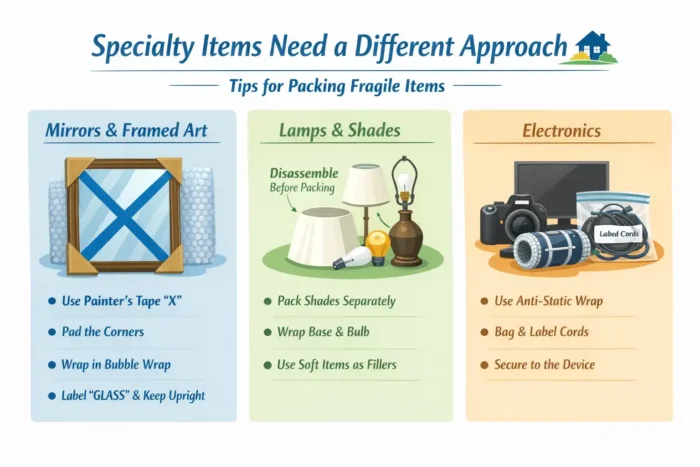
At Chamomile Go, working as a Sherman Oaks Moving Company taught us that some items need their own method entirely. The best packaging for fragile items isn’t always the same — it depends on what you’re dealing with.
Mirrors and Framed Art
These are big, flat, and easy to damage if you’re not careful.
Tape a large X across the glass with painter’s tape before anything else. If it cracks, the tape holds the pieces together. Then protect every corner with cut cardboard or foam — corners always take the first hit. Wrap the whole thing in bubble wrap, cover it with a furniture blanket, label it “GLASS,” and stand it upright. Never lay it flat.
Lamps and Shades
Take everything apart before you start packing. The bulb, harp, and shade all come off the base. Wrap the base in bubble wrap. Wrap the harp and bulb separately in packing paper. Give the shade its own box — stuffing it with paper warps the material. If you need to share box space, only pair it with soft things like pillows or blankets.
Electronics
They might not shatter like glass but electronics are sensitive in ways that cost just as much to fix. Use anti-static bubble wrap, bundle each cord separately into a labeled bag, and tape it right to the device. It prevents scratches and makes setting everything up again so much easier. Good packaging for fragile items like electronics is about protecting what’s inside, not just the surface.

Conclusion
Successfully mastering how to pack fragile items for moving takes time and meticulous care. If you find yourself overwhelmed by the volume of delicate items or simply want a guaranteed result, professional packing is the ideal solution.
At Chamomile Go, our dedicated team offers comprehensive packing services throughout the Los Angeles area. Our Sherman Oaks Moving Company utilizes professional-grade packaging for fragile items and proven techniques to ensure everything from fine china to valuable collectibles is fully protected. Contact us today for a free estimate and choose peace of mind for
FAQs
What size boxes should I use for fragile items?
Small to medium boxes work best for packaging for fragile items. Small boxes are ideal for dishes, glasses, and books. Medium boxes work for lamps, small electronics, and decorative items. Large boxes become too heavy when filled with fragile items.
Can I use newspaper instead of packing paper?
Newspaper works in a pinch but isn’t ideal. Newsprint ink can transfer to white dishes, porcelain, and other light-colored items. If you must use newspaper, wrap items first in white tissue paper. Regular packing paper is inexpensive and worth the investment.
How much bubble wrap do I need?
Plan on 2 rolls of bubble wrap for every room containing fragile items. A typical kitchen needs 3-4 rolls. Living rooms and home offices need 1-2 rolls each. Buy more than you think you’ll need.
Should I pack plates flat or standing up?
Pack plates standing on their edges, like records in a crate. This vertical position distributes weight more evenly and reduces breakage compared to stacking plates flat.
How do I pack wine glasses safely?
Fill the inside of each glass with crumpled packing paper. Wrap the stem separately with bubble wrap, then wrap the entire glass. Use cardboard dividers in boxes to keep glasses separated.