How to pack knives for moving requires real attention to detail. Sharp blades can cause injuries, handles break easily, and those bulky knife blocks are tricky to wrap properly. You are moving to a place it does not matter if it is close, by or far away. Packing the knives the way is very important. This way your kitchen will stay organized and nobody will get hurt when you are moving the knives. Packing knives for moving is something you have to do because you are dealing with knives.
That is exactly why many people call Chamomile Go when they need their kitchen things packed the right way. They know what Chamomile Go is doing. Chamomile Go does a job, with packing kitchen stuff. People trust Chamomile Go to do it correctly. Here’s the reality: knives are probably the trickiest things in your kitchen to pack safely.
One wrong move and they’re slicing through cardboard, damaging everything else in the box, or creating a dangerous situation when someone opens it later. But don’t stress about it—when you’ve got the proper materials on hand and follow a clear step-by-step method, you can get this done safely without any drama.
Gathering the Right Supplies
Before you start you need to have all the packing materials. You should use the supplies to prevent accidents and keep the blades safe. Chamomile Go always says it is an idea to get these things ready ahead of time. This makes the whole process safer and more organized, for you. Chamomile Go wants you to be careful when you are packing and have everything you need like the packing materials so you can do it safely and keep the blades protected.
Things You Will Need To Get
- Packing paper
- Bubble wrap
- Packing tape
- Small, sturdy boxes
- Permanent markers
- Towels or cardboard sheets (optional for extra padding)
If you’re packing a large number of knives, consider wearing gloves to reduce the risk of cuts. The process becomes much easier and safer when you work with clean, dry tools that are grouped properly.
Sort and Clean All Knives First
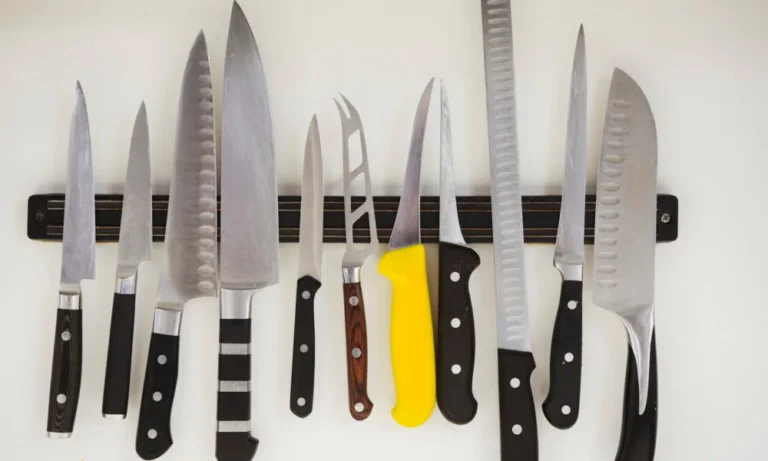
Alright, first things first—take a minute to sort through all your knives. It might feel like an extra step, but grouping them by type actually makes the whole packing thing way less chaotic and helps you see which ones need extra bubble wrap.
Here’s a simple way to divide them up:
- Butter knives
- Steak knives
- Chef knives
- Butcher knives
Now wash each one and dry them really well. Seriously, don’t skip the drying part. Any leftover moisture gets stuck under your wrapping and can cause rust spots, especially on longer moves. The last thing you want is opening boxes at your new place and finding your good knives all spotty.
Using a knife block? Pull each knife out before you pack it. Yeah, leaving them in seems like the lazy option (I get it), but they’ll bang around in there during transport and can mess up both the knives and the block itself.
Read More: How To Pack Plates To Move?
Wrap Individual Knives Properly
This is where things get real. Mess this up and you’re asking for trouble—cut fingers, ripped boxes, or knives poking through and wrecking your other stuff.
Here’s the deal:
- Grab a couple sheets of packing paper. Lay them flat.
- Put your knife down, blade facing away from you (obviously).
- Roll it up tight, starting from the blade end.
- Small knives like steak knives? You can wrap 3-4 together. Just flip every other one so the blades aren’t all pointing the same way.
- Big chef’s knife? Add extra paper. Don’t be stingy.
- Wrap the whole thing in bubble wrap or a dish towel.
- Tape it shut. Don’t tape the actual knife.
That’s it. Works every time, whether you’re moving one knife or twenty. And yeah, this is basically how to pack knives when moving without drama.
Getting Them Into Boxes
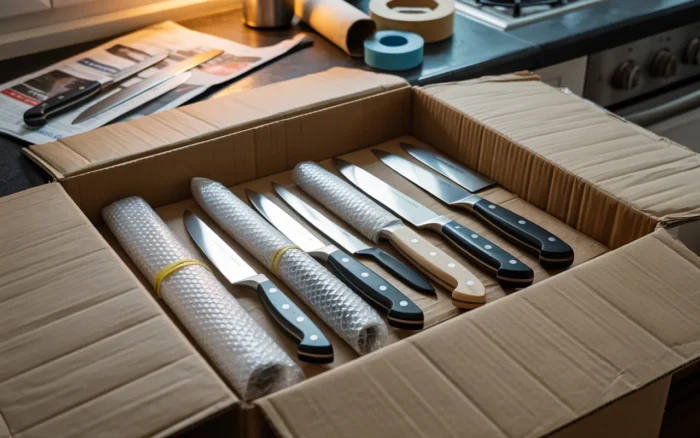
- Now the wrapped knives need a home.
- Grab a small, solid box. Put bubble wrap on the bottom.
- Lay the knives flat. Don’t stand them up.
- Fill empty spaces with towels or paper so nothing moves.
For a knife block (how to pack knife block for moving): tape the knives in their slots, wrap the whole thing, pack it flat. These things are heavy, so reinforce your box.
Label and Transport Safely
Proper labeling is essential when transporting knives. Mark the box clearly on all sides with:
- Knives – Sharp Objects
- Handle with Care
- Arrows showing which side is up
Extra Tips for Safe Knife Transport
Moving across the state and worried about how to pack knives when moving long distances? Keep these things in mind:
- Never leave knives loose. Just don’t.
- Don’t use newspaper—the ink gets all over your blades.
- Add extra tape to the bottom of your box for strength.
- Don’t stuff too many knives in one box. Heavy boxes break easier.
These might seem obvious, but they matter a lot when you’re hauling different types and sizes of knives. Better to overdo it on safety than deal with a mess later.

Final Thoughts
Packing sharp kitchen tools doesn’t have to be stressful when you know exactly how to pack knives for moving safely and correctly. By choosing the right materials, wrapping each blade properly, and packing boxes securely, you can protect your kitchen essentials with confidence. Whether you’re moving across the city or preparing for a long-distance relocation, these methods help keep your belongings organized and prevent injuries.
If you need expert help with secure packing or want to ensure your fragile kitchen items are handled professionally, contact us today for safe and reliable moving assistance.
FAQs
Can I pack knives in the same box as other kitchen items?
It’s best to pack knives separately to prevent accidents and protect delicate items like dishes, glassware, or utensils.
Should I use a knife block for moving instead of wrapping individual knives?
You can, but make sure the knives inside the block are taped securely. The block should also be wrapped in bubble wrap and packed in a sturdy box.
How do I keep knives from sliding around inside the box?
Fill all gaps with towels, bubble wrap, or crumpled paper to ensure the knives stay in place during transport.
Can I use dish towels instead of bubble wrap?
Yes, dish towels work well for cushioning and add extra padding. Just be sure the knives are wrapped in packing paper first for safety.
How early should I pack my knives before moving day?
Pack knives a day or two before your move. This ensures you can still prepare meals while keeping your packing schedule organized.