You’re standing in a rental yard, staring at four trucks that all look roughly the same size until someone points out one holds double what the other does. This is the moment most people actually type “What size moving truck do I need?” into Google, not during calm planning, but standing there with a deadline. Guess small, and you’re making a third trip at 9pm. Guess big and you just paid for a truck that’s half empty with your couch rattling around in the back.
We’ve loaded enough trucks at Chamomile Go to know exactly where this goes sideways for people. Usually it’s not laziness; it’s just that nobody actually knows how much cubic footage a two-bedroom apartment turns into until it’s all sitting on the lawn.
Why Choosing the Right Truck Size Matters
Here’s the annoying part about getting this wrong: both directions cost you. Too small means extra trips, extra gas, and stuff getting crammed in ways that lead to a cracked lamp or a scratched dresser. Too big means you’re paying for square footage you never touch, and now you’re also driving something the size of a school bus down a residential street you don’t know.
Most people just don’t picture volume accurately. A garage that “isn’t that full” somehow eats a quarter of a 20-foot truck once everything’s boxed up.
What Happens If You Pick the Wrong Truck
A few things tend to happen almost immediately once the wrong size shows up:
- Fuel and mileage costs creep up fast
- You might eat a second day of rental fees
- Items get squeezed into gaps that were never meant to hold weight
- Loading takes twice as long as it should
- The whole day turns into one long delay
Ask any moving crew, ours included, and the first question they’ll throw back at you is how much stuff you’re actually bringing. That’s really the whole ballgame behind figuring out what size moving truck you need before the truck even shows up.
Read More: How Much Is A Moving Truck?
Simple Basics of How Moving Truck Sizes Work
Rental companies size these things by length, usually 10, 15, 20, or 26 feet. A rough rule that actually holds up: figure 150 to 200 cubic feet per room. Not exact, but close enough to stop you from guessing blind.
Some rental sites publish their own size charts, and they don’t always agree with each other. Better to build your own estimate off your actual home than trust a chart built for someone else’s studio apartment.
Quick Truck Size Cheat Sheet by Home Size

A rough starting point, nothing fancier than this:
- Studio or dorm: cargo van or 10-12 ft truck
- 1-2 bedroom apartment: 14-17 ft truck
- 2-3 bedroom home: 20-22 ft truck
- 4+ bedroom home: 24-26 ft truck
That’s built around a fairly average amount of stuff. Own more furniture than most people your home size? Go up a tier.
Detailed Truck Size Guide
Below is a clearer breakdown of what commonly fits into each truck size and how it relates to the related keyword truck sizes for moving. Chamomile Go has found this guide especially helpful for planning efficient and stress-free moves.
Breaking this down by what actually fits helps more than a vague size chart ever does.
A cargo van handles small local moves fine, a mattress, a couple pieces of furniture, maybe 10 to 15 boxes.
A 10-12 ft truck covers studios and small one-bedrooms, somewhere around 400-500 cubic feet, one or two rooms of furniture plus 20-30 boxes.
Step up to 15-16 ft for a 1-2 bedroom home, 650-800 cubic feet, enough for appliances, a sofa, dressers, 40-60 boxes.
20-22 ft handles 2-3 bedroom homes comfortably, 1,000-1,500 cubic feet, room for larger furniture, big appliances, patio stuff, and a lot of boxes.
24-26 ft is where most 3-4+ bedroom homes land, up to 2,000 cubic feet. If you’re asking what size moving truck you need for a 4 bedroom house specifically, this is usually your answer.
How to Estimate the Size of Your Own Move
Start by walking through your place room by room and flagging anything oversized. A few honest questions to ask yourself:
- Is there a sectional in the mix?
- Are the major appliances coming too?
- What’s actually stored in the garage or attic?
- Any patio furniture or gym equipment hiding somewhere?
- Plastic totes instead of regular boxes?
Every yes on that list nudges your truck size up a notch.
Special Situations Where You May Need a Larger Truck
A modest-looking home doesn’t always mean a smaller truck. Size up if you’re dealing with:
- A long-distance or interstate move
- Bulky hobby gear, gym equipment, tools, an actual drum kit
- A business moving inventory or office furniture
- Heavy wooden furniture or an oversized bed frame
Renting one size up almost always beats burning half a day on a second trip.
When a Smaller Truck or Van Is Enough
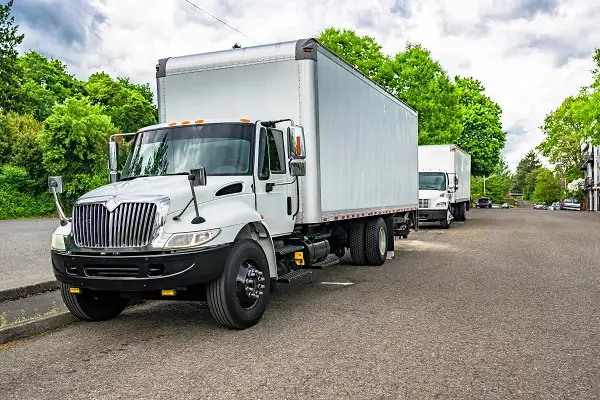
On the flip side, a smaller option makes sense if:
- You’re moving out of a furnished place
- It’s a same-city, local move
- Most of what you own is lightweight
- You’re genuinely downsizing
If two short trips cost less than one big rental, take the smaller truck.
Safety, Weight Limits, and Driving Comfort
Weight limits aren’t just a technicality. Overload a truck and it handles worse, stops slower, and gets genuinely dangerous, especially at highway speed. Anything in the 20-26 ft range also turns wide and parks tight, which catches a lot of first-time renters off guard.
If driving something that size sounds stressful, take the smallest truck that still fits comfortably. There’s no prize for going bigger than you need.
Cost Factors Related to Truck Size
What you actually pay comes down to a handful of things stacking together: the daily rate, mileage fees, fuel, insurance, and whatever add-ons you grab, dollies, blankets, straps. Renting the right size, not more, not less, is really the cheapest way through this.

Step-by-Step Guide to Choose the Right Truck Size
Step 1: Count the Rooms You’re Moving
Walk through and count everything, bedrooms, living room, kitchen, basement, garage, storage. A packed home office or closet adds more volume than people expect, don’t skip it.
Step 2: Match Your Home to the Cheat Sheet
Line that room count up against the sizing guide above. A studio lands around 10-12 ft, a 3-bedroom usually needs 20-22 ft.
Step 3: Adjust for Extra or Oversized Items
Big furniture pushes you up a size. Minimal furniture might let you drop down one. Adjust based on what you actually own, not the average.
Step 4: Consider the Moving Distance
Long-distance moves favor going bigger since a second trip isn’t realistic. Local moves sometimes save money with two smaller runs instead of one large rental.
Step 5: Confirm With a Moving Professional
Once you’ve got a rough number, run it by someone who does this daily. A quick look at your inventory usually confirms or corrects the size fast, and it’s a lot cheaper than guessing wrong on move day.
Final Thoughts
Choosing the right moving truck is all about understanding how much space your belongings truly take. Use the cheat sheet, count your rooms, and adjust based on any large or heavy furniture to avoid choosing the wrong size.
If you’re still asking What Size Moving Truck Do I Need, remember that the best choice depends on your home size and the volume of your items. If you need help estimating the right truck size for your move, feel free to reach out and contact us for guidance or support.
FAQs
Is it better to choose a bigger truck than I think I need?
Choosing a slightly larger truck is safer if you have bulky furniture, but for small local moves, the smallest size that fits your belongings is usually the most cost-effective.
Can a cargo van fit a queen-size mattress?
Most cargo vans can fit a queen mattress, but the fit may be tight and requires careful loading to avoid bending or damaging the bed.
What size truck works for a 2-bedroom apartment?
A 15–16 ft truck is usually enough for a standard 2-bedroom apartment, especially if you have average furniture and a moderate number of boxes.
How do I estimate the right truck size for a 3-bedroom house?
A 20–22 ft moving truck typically works for a 3-bedroom house, but consider the number of large furniture pieces and boxes. Overestimating slightly can prevent multiple trips.
Can I move everything in one trip, or will I need multiple trucks?
It depends on the total volume of your belongings and the truck size. For larger homes, multiple trips or a bigger truck may be necessary to avoid overloading and ensure safe transport.