Relocating is usually fun, but when you see how much stuff you’ve amassed over the years, it can get a little panic-inducing. One of the most critical questions before packing is what to leave behind when moving because not everything you own merits a place in your new place.
Running around getting rid of things you don’t need before you move will save you time, money, and make unpacking simpler. This guide will aid you in choosing what stays and goes and help you make informed decisions so that your move feels lighter and more intentional. Many professional movers, such as Chamomile Go, advise decluttering prior to packing so as not to move things that no longer serve you.
Why It’s Important to Declutter Before Moving
A move is a great opportunity to start over with your living space. Bringing unnecessary things into a new home can cause clutter to resettle more quickly than you thought possible.
When you declutter before you move, you get a fresh start, inside and out. Having less stuff means fewer boxes, less money spent on shipping, and less stress when you’re unpacking. It also encourages you to concentrate on things that really enrich your day-to-day life.
Time management is another benefit that is worth mentioning. Focusing on what to take makes the whole moving process more streamlined. Rather than spending energy wrapping and protecting things you won’t use, focus on sorting and safeguarding the things you really need.
Items That Are No Longer Useful or Functional
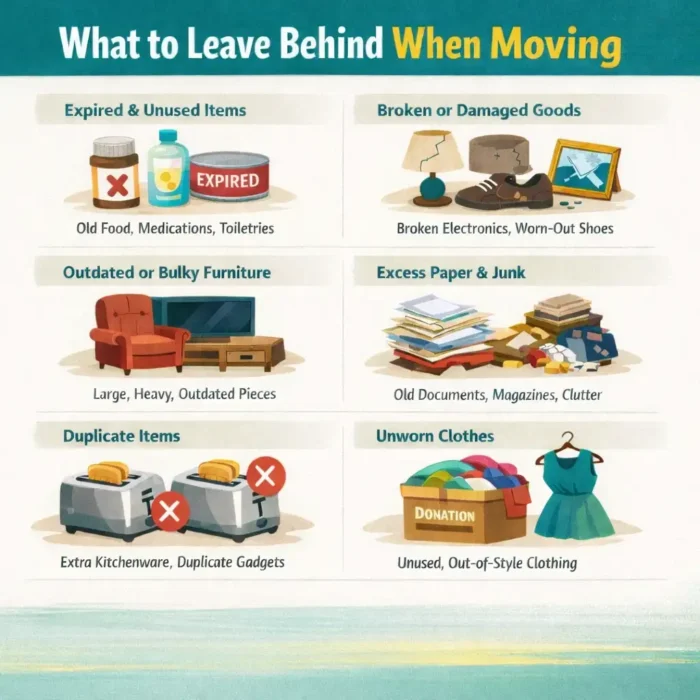
Monetary usefulness of some belongings silently decays with time. Moving is the time to surrender them, make peace with them. Broken, old, unused things can linger in your home and your life, taking up space but not really serving you.
Broken, Damaged, or Worn-Out Items
If something is broken and it has been years since you last fixed it, it’s probably never going to happen. Stale, inedible food, or dust-covered old electronics that no longer work, cracked furniture, or chipped décor pieces most of the time are worth more to move than in one’s house. Keep your possessions from weighing you down: holding on to those things is exactly what adds unnecessary weight and expense to the move,” she said.
Saying goodbye to them makes space for better, more functional replacements in the new house.
Outdated or Unused Household Items
Many homes have items that have not been used for years—kitchen gadgets, tools, and appliances are among the most common. So much for these treasures to be rediscovered after the move
Knowing what you really use and being realistic about what you actually use avoids packing clutter that you will never serve a purpose.
Clothes and Personal Items You No Longer Need
Closets are· usually the most disorganised spaces in a house. Moving serves to remind you of how much clothing we have that we don’t wear. Sorting through your belongings can be emotional, but it’s also liberating.
Clothing You Haven’t Worn in Years
If you haven’t worn that clothing in a year or more, you’re not going to wear it again after you move. Donate or toss the clothes that are too tight, uncomfortable or no longer suit your life. Saying farewell to your wardrobe clutter also means you’ll have less to pack and unpack, and you’ll be able to appreciate a further auto upgrade in the form of a more organised closet in your new place.
Excess Accessories and Personal Items
Shoes, handbags, accessories, and make-up all have a way of piling up. Outdated makeup, you don’t know when to wear that jewelry, and shoes that you’ve completely worn out – these things sneak into your move in the form of unneeded boxes. Once you’re settled in, paring down to what you actually use in your day-to-day life will simplify things for you.
Read More: Will Movers Pack for You?
Kitchen Items That Are Not Worth Packing
When you compare kitchens to other rooms in the house, they tend to accumulate the most mess. A lot of stuff is just “stashed away” for emergencies, but never actually needed.
A selective approach to what you cook with in the kitchen means more space and less packing for you.
Duplicate and Rarely Used Kitchen Tools
Extra spatulas, unused appliances, and double pots and pans are typical in every kitchen. If you have duplicates of an item, only hold on to the best.
Getting rid of your doubles lightens the load and ensures your new kitchen stays well stocked and clutter-free.
Expired or Open Food Items
Opened condiments, spices past their expiry date and pantry products are hardly ever worth taking.
Food transport can mean spills and mess for nothing.
Use as much as you can, then throw the rest away. It makes moving day cleaner and easier.

Furniture and Large Items That Don’t Fit Your New Space
Bulky goods can be the most costly aspect of a move. That doesn’t mean you have to take every piece of furniture with you.
Planning for your new home allows you to make better decisions.
Furniture That Won’t Fit or Match
If the sofa, table, or bed doesn’t fit right in your new house, taking it with you is just setting yourself up for regret. Mismatched items or well-used items can also make a new place look cluttered.
To be sold or donated, these items should be moved before the move so that you can re-imagine your new place with purpose.
Low-Quality or Temporary Furniture
Flat-pack or temporary furniture rarely makes it through more than two moves. When something is inherently unstable or damaged, it might not be worth it.
There is a tendency to miss this point when working out what items are not worth moving, but in some cases, they are easier and even safer to replace afterwards.
Paper, Documents, and Old Records

The buildup of paper clutter is gradual, but it can consume a surprising amount of space.
A move is a great opportunity to get organized and pare down.
Old Documents You No Longer Need
Out-of-date invoices and warranties, or manuals for products that have been replaced or discontinued, don’t need to accompany you on a moving van. Digitise key documents and recycle the paper without risking your identity.
This eliminates the number of boxes, and later, important files are more accessible.
Books and Magazines You Won’t Read Again
Books that you’ve already read, magazines you don’t look at, have to be donated in most cases. Hold on to only the meaningful or frequently referenced books to make your move easier.
It’s a good way to practice getting rid of stuff before moving.
Items That Are Cheaper to Replace Than Move
There are some things that are more expensive to move than to buy new ones. Identifying these items will save time and money. A rude but valid reality many movers miss.
Cheap Household Items and Décor
Inexpensive rugs, lamps and decorative items may not make the journey unscathed. If an item is cheap to replace, it’s usually best to leave it behind. Particularly with items that you know won’t match your new place!
Hazardous or Restricted Items
Cleaning chemicals, paint, propane tanks, and similar items are often restricted by moving companies. These should be used up or disposed of safely before moving day.
Knowing what to get rid of when moving helps avoid last-minute problems.
How Decluttering Makes Packing Easier
Decluttering alleviates stress, saves you time, and adds clarity to your move. Less stuff equals better organization and less unpacking.
With some practical application of the decluttering tips for moving, you’ll be able to concentrate on getting settled in your new place rather than dealing with extra mess.
Professional movers such as Chamomile Go also attest to the fact that customers who declutter prior to moving have better results across the board when it comes to moving.
Conclusion
Knowing what to leave behind when moving can turn a stressful move into a clean slate. When you release your hold on things that are out of date, not used, or broken, you save money, save time, and make room for a more organized life in a new place. When you declutter before your move, you can move forward with intention, clarity and confidence — making the transition smoother and so much more fruitful.
If you want moving specialist in Sherman Oaks Choose Chamomile Go for reliable moving, packing, and logistics services. Contact us today to get started!
Frequently Asked Questions (FAQs)
How far ahead should I be cleaning out before I move?
Going out on a limb here, but it’s a good idea to start decluttering at least a month ahead of your move to avoid panicked decisions.
Should I sell or donate things before I move?
Donate the things you want out of your house fast; sell the things that are worth your time.
Even if the movers are packing for me, should I declutter?
Yes—everything gets packed by the movers, so you want to declutter first to avoid moving stuff you don’t want.
What rooms do I declutter first?
Begin with storage spaces, closets, basements or attics that tend to hold the unused things.
How do you deal with sentimental things?
Retain the most meaningful pieces and snap photographs of other you can part with.
Does decluttering really reduce moving costs?
Having less to move indeed means you’ll require fewer boxes, less labor, and transportation, which means lower moving costs.
What if I miss something I got rid of?
Think of it in terms of practicality: You can replace stuff, but you can’t replace peace of mind.